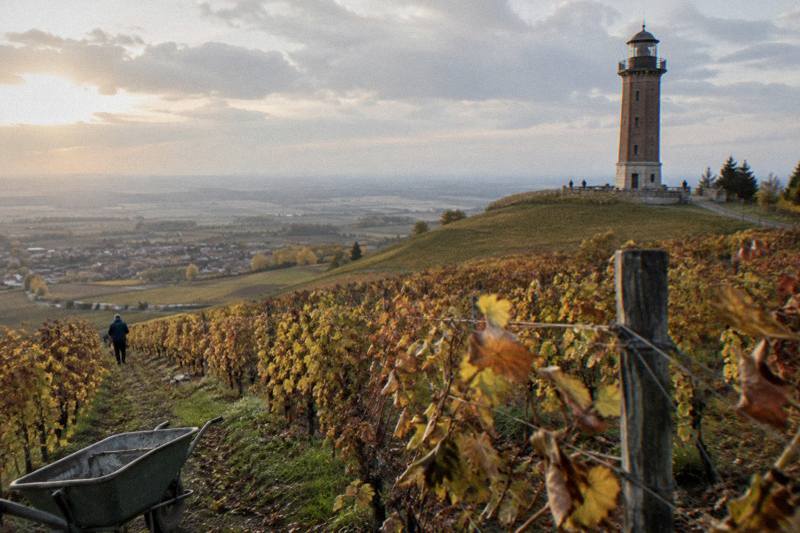
Montagne De Reims: Vineyard Villages And Viewpoints
The Montagne de Reims is the forested plateau of pinot noir country between Reims and Epernay, stitched with villages, viewpoints and cellar doors. Here is how the region fits together and which days out actually cross it.
Short answer
The Montagne de Reims is a forested plateau between Reims and Epernay holding pinot noir vineyards, villages like Verzenay, Mailly-Champagne and Rilly-la-Montagne, and the Verzenay lighthouse viewpoint. Tours from Paris that cross it start from $202.00 per person; from Reims, half days with tastings start from $134.00 per person.
The Montagne de Reims is the least understood corner of Champagne for most visitors from Paris. Everyone can picture the Avenue de Champagne in Epernay or the great cellars under Reims, but the plateau between the two cities, the pine forest that caps it and the ring of pinot noir villages hugging its slopes rarely make the itinerary. That is a miss. The region's sparkling wine depends on this ground, its most photographed viewpoint sits here, and several of the day trips that leave Paris each morning drive straight through it whether the passengers realize it or not.
This guide maps the Montagne de Reims: what it is, which villages and viewpoints sit inside it, which tours from Paris and Reims actually cross it, and what a day in the park costs. The facts come from official appellation figures, house pages and tour listings, and the planning ranges reflect what operators charge across the year.
What Is The Montagne De Reims?
The Montagne de Reims is a forested limestone plateau rising between Reims and Epernay, the northernmost of Champagne's main vineyard zones and the heartland of pinot noir. Its regional park covers a landscape of vineyards, villages and beech-pine forest, and the UNESCO Champagne Hillsides, Houses and Cellars inscription covers Saint-Nicaise Hill in Reims, a component separate from the Montagne de Reims.
The name misleads first-time visitors. It translates as the mountain of Reims, but the relief is modest rather than alpine, enough of a rise for real views over the plain. What the plateau does have is a rare geographic trick: the forest cap on top, the vineyards wrapped around the middle slopes, and grain fields on the lower ground. The band of vines exists because frost drains off the slopes, so the middle ring is where the pinot noir grows.
Scale matters here. Champagne as an appellation covers 34,200 hectares across 319 villages, worked by 16,460 growers and shipped by 410 houses, 266.1 million bottles left the region in 2025. The Montagne de Reims is one of the main vineyard areas inside the Champagne appellation, and its signature grape is pinot noir, the variety that gives champagne its structure and body. The big houses of Reims, from Pommery to Veuve Clicquot, blend Montagne fruit into their cuvées year after year.
UNESCO recognized part of this landscape in 2015. The Champagne Hillsides, Houses and Cellars inscription covers 1,101.72 hectares across three components, and one of them is Saint-Nicaise Hill in Reims, where the crayères, the Gallo-Roman chalk quarries that became cellar networks, sit directly below the western edge of the Montagne. The UNESCO listing page spells out the components, and Taittinger's own experience page describes cellars "eighteen metres underground, in a unique setting of galleries, cellars and Gallo-Roman chalk quarries listed as UNESCO World Heritage Sites."
For a visitor, the practical shape of the plateau is a loop. Reims sits at its northwest corner, Epernay at its southeast corner, and the D-road loop over the top connects the villages in between: Verzenay, Mailly-Champagne, Rilly-la-Montagne and their neighbors. Tours that run this loop give you the region in miniature, forest, vines, a viewpoint and cellar doors, in a single morning.
Which Villages And Viewpoints Sit In The Montagne De Reims?
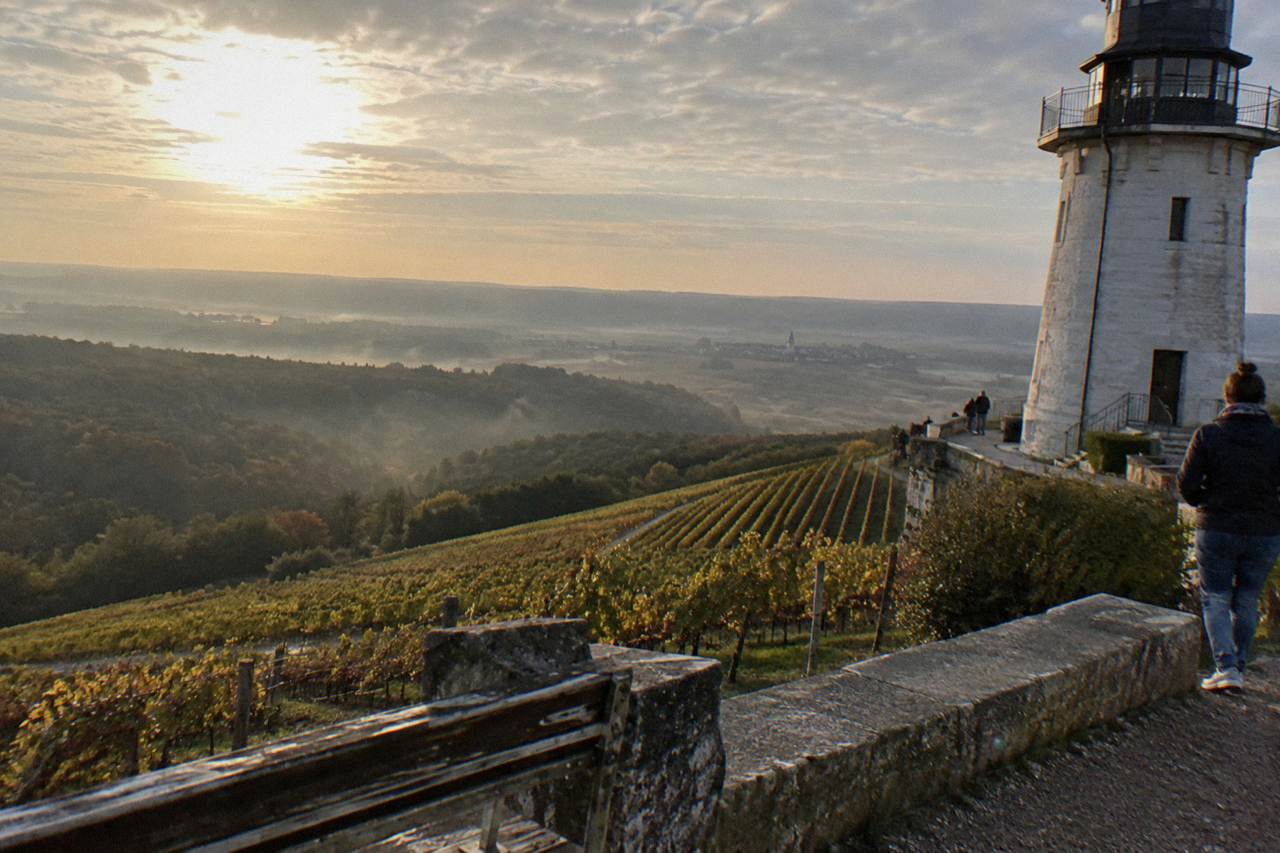
The villages to know are Verzenay with its vineyard lighthouse, Mailly-Champagne, Rilly-la-Montagne and Villers-sous-Chatillon, a Marne valley stop pinot noir growers draw on. The lighthouse of Verzenay is the signature viewpoint: a working lighthouse set among vines, far from any sea. Verzenay and Mailly-Champagne are two of the 319 villages that make up the Champagne appellation.
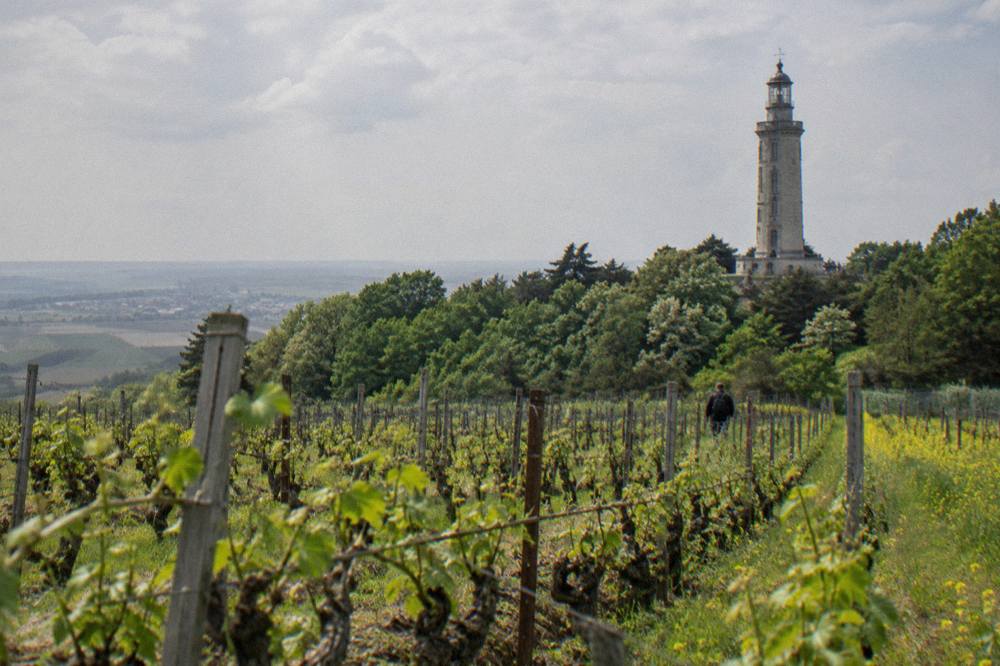
The lighthouse deserves its fame. A vineyard lighthouse standing among the vines above Verzenay, far from any coast, it doubles as a vineyard museum, with a viewing platform over the Montagne and, on clear days, the plain of the Marne. The tour listings that stop here treat it as the region's defining photo stop, and one of the champagne day trips from Paris that list a Verzenay stop, the 11-hour shared tour from $202.00 per person, puts the lighthouse beside Hautvillers and the Reims cathedral on its route. Its opening arrangements change with the season, so check locally before counting on a climb to the top.
The villages themselves are small and quiet, which is the point. Mailly-Champagne gives its name to a long-standing village cooperative and remains a grand cru pinot noir village. Rilly-la-Montagne appears on tour stops as a tasting village on the plateau's western side. Villers-sous-Chatillon, in the southern extension toward the Marne valley, shows up on the Lanson day trip's route. Each is a few streets, a church and a handful of producer doors; none is a full day on its own.
| Village | What It Is Known For | Where It Appears On Tour Routes |
|---|---|---|
| Verzenay | Grand cru pinot noir village, vineyard lighthouse viewpoint | Reims, Cellars and 4 Tastings day trip from Paris |
| Mailly-Champagne | Grand cru village on the northern slope | Private train day trip from Paris with tastings |
| Rilly-la-Montagne | Tasting village on the western plateau | Day trip from Reims with 9 tastings |
| Villers-sous-Chatillon | Southern-edge village in the Marne direction | Lanson visit day trip from Paris |
One caution on Hautvillers, the village most often bundled with this loop on the plateau's southern edge: the abbey itself is closed to visitors, it is private Moët & Chandon property, and no opening date exists to publish. The adjacent church is accessible and the village streets are worth the walk. The Hautvillers and Dom Perignon abbey guide covers what you can and cannot see there.
For travelers weighing this loop against the region's other headline stops, the Reims or Epernay comparison lays out the two city anchors, and the plateau sits precisely between them, which is why so many tours squeeze it in en route.
If mapping the region has you ready to pick a driver, these two days cross Montagne de Reims ground in different styles: a shared minivan day out of Paris with lunch included, and a shorter half day from Reims spent among family growers.wers.
Which Tours From Paris Cross The Montagne De Reims?
Several full-day trips from Paris drive the plateau, and the stops field tells you which. The Full Day All-inclusive minivan tour stops at Verzenay, Reims cathedral and Pommery from $267.98 per person. The Reims, Cellars and 4 Tastings trip includes the Verzenay lighthouse from $202.00 per person. A private VIP day with a local wine expert crosses the Montagne de Reims from $961.30 per person.
The minivan day is the most direct way to buy the plateau. Its route lists Verzenay, Reims, the cathedral and Vranken Pommery, runs 12 hours door to door, and includes hotel pickup, lunch and four tastings in the from price of $267.98 per person. It carries a 4.9 rating across 187 reviews, which is a solid pool for a single-vehicle product, and the listing shows free cancellation. You can read the full breakdown on the minivan full-day tour page, and check availability for your dates if the plateau loop is the priority.
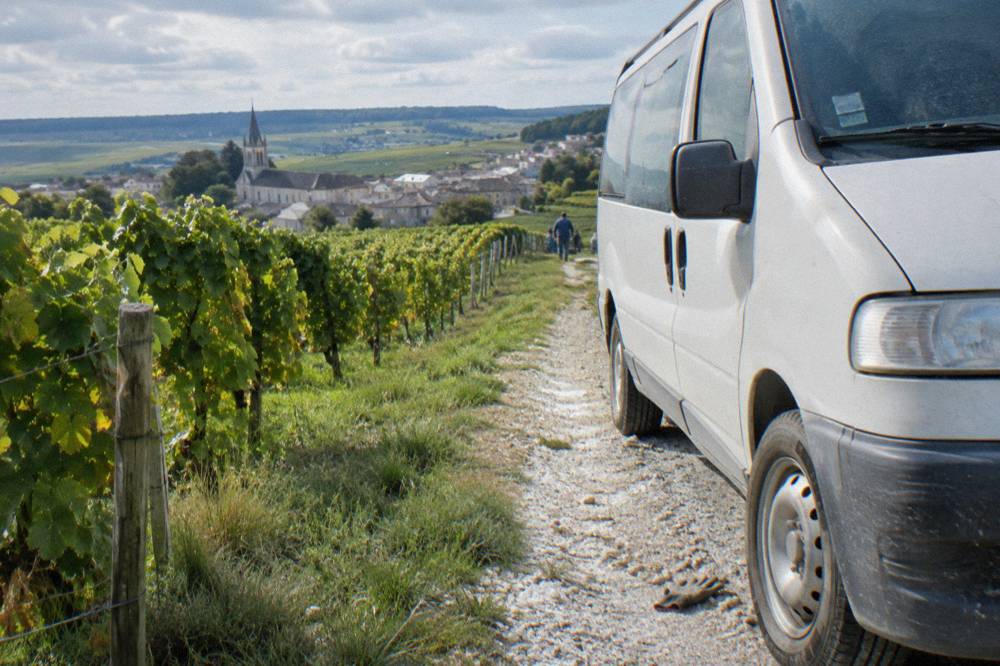
The cheaper option trades comfort for the same headline stop. The Reims, Cellars and 4 Tastings day from $202.00 per person is shared, includes hotel pickup and the Verzenay lighthouse on its stops list, but lunch is not listed and its rating of 4.25 across 21 reviews sits below the level this site would call top tier. It is the lowest from-Paris price on a day trip that touches the plateau, and the trade-offs are real: four tastings and the weakest rating of any from-Paris tour.
At the other end, the private VIP day with a local wine expert guide lists Montagne de Reims, Reims, the cathedral and Maison Pommery as stops, includes lunch and hotel pickup, and runs 11 hours from $961.30 per person. That figure is the rate for the smallest booking on a private tour, not a total and not a group price. It carries a 4.9 rating across 43 reviews, and the wine-expert framing suits travelers who want the plateau explained, not just driven.
| Tour From Paris | Plateau Stops | From Price | Rating And Reviews |
|---|---|---|---|
| Full Day All-inclusive Minivan | Verzenay, Reims, Pommery | $267.98 per person | 4.9 across 187 reviews |
| Reims, Cellars and 4 Tastings | Verzenay lighthouse, Hautvillers | $202.00 per person | 4.25 across 21 reviews |
| Private VIP Day, Wine Expert Guide | Montagne de Reims, Pommery | $961.30 per person | 4.9 across 43 reviews |
| Lanson Visit Day Trip | Villers-sous-Chatillon, Hautvillers | $432.18 per person | 5.0 across 93 reviews |
The wider price band for small-group and shared days from Paris runs from $202.00 to $432.18 per person, and every small-group figure above sits inside it. The champagne tours compared guide breaks the whole field down by budget.
Can You Visit The Montagne De Reims Without A Car?
Yes, by train to Reims and a half-day tour from there. The TGV covers Paris Est to Reims in about 45 minutes, and half-day tours departing Reims with tastings run from $134.00 per person. These Reims-based prices exclude the train fare, so they are not like-for-like with from-Paris day trip prices that include the drive.
The train is the unlock. Reims is close enough to Paris that the rail journey is a fraction of the day, and the SNCF Connect route page shows fares and times for the corridor. Once in Reims, the plateau villages are a short drive south, and local operators run half-day loops with tasting stops that a visitor without a car could not reach otherwise.
The strongest of these for value is the morning tour from Reims visiting two small family-owned producers near the city, from $134.00 per person, 4 hours, small group capped at 8, rated 4.79 across 565 reviews, with six tastings listed. The afternoon version from $148.24 per person runs 4.5 hours, stops at Hautvillers, and carries a 4.8 rating across 663 reviews. Both list free cancellation; neither lists lunch.
For a full Reims-based day, the three-family-domains trip from $286.00 per person spends 8 hours among producers with lunch and nine tastings included, rated 4.8 across 251 reviews. There is also an electric-bike option from $213.00 per person that rides the vineyard lanes out of Aÿ-Champagne toward Hautvillers, 5 to 7 hours with lunch, rated 4.84 across 232 reviews, a genuinely different way to feel the slope of the terrain.
The planning math differs from Paris departures. A Reims-based half day plus a train ticket can undercut the cheaper Paris day trips, but you are assembling the day yourself, and the from-Paris tours bundle pickup, driving and timing into one price. The champagne by tour or train guide works through the trade-offs in detail.
When Is The Best Time To See The Vineyards?
September and early October combine ripening vines with comfortable walking weather, and harvest runs mid-August to September. July is the warmest month at an average daily high of 24.7 degrees C in Reims. Rain falls on roughly 8 to 11 days per month year-round, so no season is dry; layer for it and book cellars ahead regardless.
The vineyard year gives each season a different plateau. Pruning runs November to March with a pause mid-December to mid-January, bud break comes late March into April, flowering in May and June, veraison, the color turn, in August, and harvest from mid-August to September. The 2026 harvest made history: the Comité Champagne announced the ban on 12 August, first picking began from 6 August, picking was widespread from 17 August, roughly 14 days earlier than 2025, the earliest ever recorded in the region, with moderate yields.
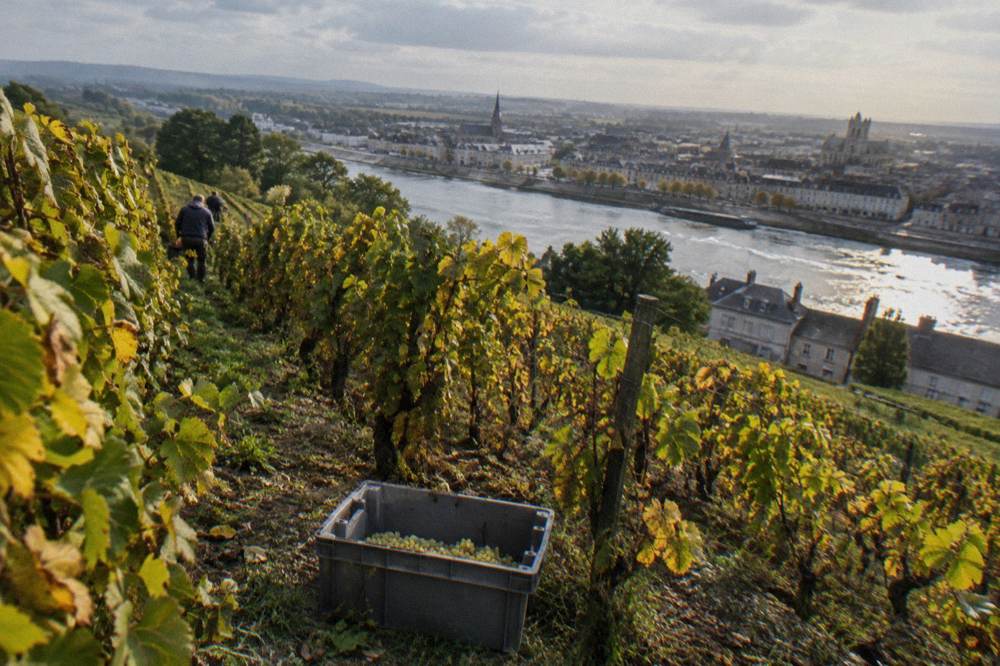
The committee's review, published on champagne.fr, describes grapes in exceptional sanitary condition with balance that recalls historic vintages. That is news for the bottle in your glass more than for your itinerary, but it explains why late-summer visits see machinery and pickers in the villages, and why some small producers close their doors or shorten hours while the fruit comes in.

| Month | Average High C | Average Low C | Rainy Days (1mm Or More) |
|---|---|---|---|
| March | 11.3 | 2.6 | 10.9 |
| May | 18.8 | 8.1 | 10.4 |
| July | 24.7 | 12.9 | 8.1 |
| September | 20.3 | 9.8 | 8.2 |
| October | 15.6 | 7.2 | 8.9 |
These are Meteo-France 30-year averages for the Reims-Courcy station, so treat them as a planning baseline, not a forecast. The best time to visit champagne guide extends the calendar to house opening patterns, which vary by property; no blanket winter closure applies across the houses, and each booking page carries its own schedule.
What Does A Montagne De Reims Day Cost?
A shared or small-group day from Paris across the plateau costs between $202.00 and $432.18 per person. A private day with a wine expert guide starts at $961.30 per person, the smallest-booking rate. From Reims, half days run $134.00 to $148.24 per person, excluding the train. House cellar visits booked directly cost 36 EUR at Veuve Clicquot and 48 EUR or 65 EUR at Moet and Chandon.
Compare these numbers by looking at what each price carries. The cheap from-Paris shared day at $202.00 per person includes pickup and four tastings but no lunch. The $267.98 minivan day adds lunch, a Pommery stop and a Verzenay stop for about 65 dollars more. The 8 Tastings and Lunch day from $364.00 per person, rated 4.81 across 1,780 reviews, the most reviewed product on this site's pages, splits the difference toward the tasting count, with a major house and a family estate on its stops and the house chosen varying by date.
| Way To See The Plateau | From Price | What The Price Carries |
|---|---|---|
| Half day from Reims, two producers | $134.00 per person | 4 hours, 6 tastings, no train fare |
| Shared day from Paris, 4 tastings | $202.00 per person | 11 hours, pickup, lighthouse stop |
| Minivan day from Paris | $267.98 per person | 12 hours, pickup, lunch, Pommery |
| 8 Tastings and Lunch day | $364.00 per person | 10 hours, pickup, lunch, 8 tastings |
| Private VIP day, wine expert | $961.30 per person | 11 hours, pickup, lunch, private guide |
The how much does a champagne tour cost guide unpacks the full price ladder, including the luxury and lunch tier that runs from $826.74 to $1,197.35 per person. Every guided day trip and tasting option is listed on Champagne Tours From Paris.
What Should You Know Before You Go?
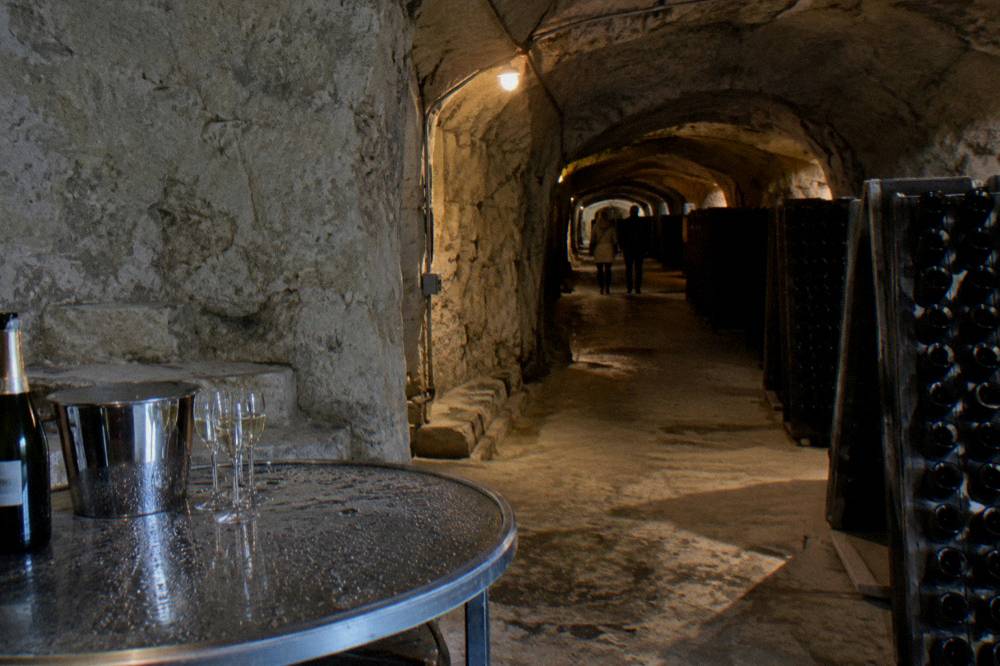
The plateau is high ground with real weather swings, the cellars are cold, and the named houses on any route depend on the listing's stops. Pommery's cellars hold 10 C all year. Moet and Chandon advises warm clothing for its 28 km underground network. Never assume a specific house is on a tour unless its stops list says so.
Dress for two climates in one day. The plateau walk can be breezy even in summer, and the cellar descent is cold everywhere: Pommery states 10 C in its cellars all year round, and Moët and Chandon's visitor page says the cellars maintain a cool temperature and advises warm clothing. The what to wear for a champagne cellar tour guide builds a packing list around exactly this.
Read each tour's stops before booking. Some listings name a major house as one possible stop and state that the house varies by date; others say houses are chosen with the guide on the day. That flexibility is normal in the region, but a traveler fixed on one name should confirm it is promised, not merely possible. The same discipline applies to pickup and lunch: only the inclusions shown on the booking page exist, and anything unlisted is neither promised nor ruled out.
Book house visits ahead where you want them. Moët and Chandon's own visitor page recommends advance online booking because places are limited, with walk-ins possible but not assured. Veuve Clicquot's Reims cellars run seasonal opening patterns rather than a year-round daily schedule, so check the house's booking page for the dates of your trip rather than assuming a door will be open.
One more planning note for the region's edges: the Palais du Tau in Reims is closed for renovation until 2027, and the Reims cathedral towers run bookable guided tours only in season, so neither belongs in a fixed itinerary without checking current arrangements. The cathedral nave itself remains the region's free landmark, and most plateau tours pause at it between vineyard stops.
How Do You Fit The Montagne Into A Champagne Itinerary?
Pair the plateau with either Reims or Epernay, not both cities plus the loop in one day unless a tour bundles it. Reims anchors the plateau's western cellars, Epernay the southern avenue, and the villages sit between them. A single well-chosen tour from Paris or a train-plus-half-day plan from Reims covers the ground most travelers want.
The geometry decides the day. Reims and Epernay are the two anchors, the plateau villages string between them, and Hautvillers hangs off the southern edge. Tours solve this by driving the loop: out of Paris in the morning, cathedral and a house in Reims, up and over the plateau, down through Hautvillers or the Marne-edge villages, and back to Paris by evening. Independent travelers on the train can copy the logic by basing in Reims and taking a half-day loop south.
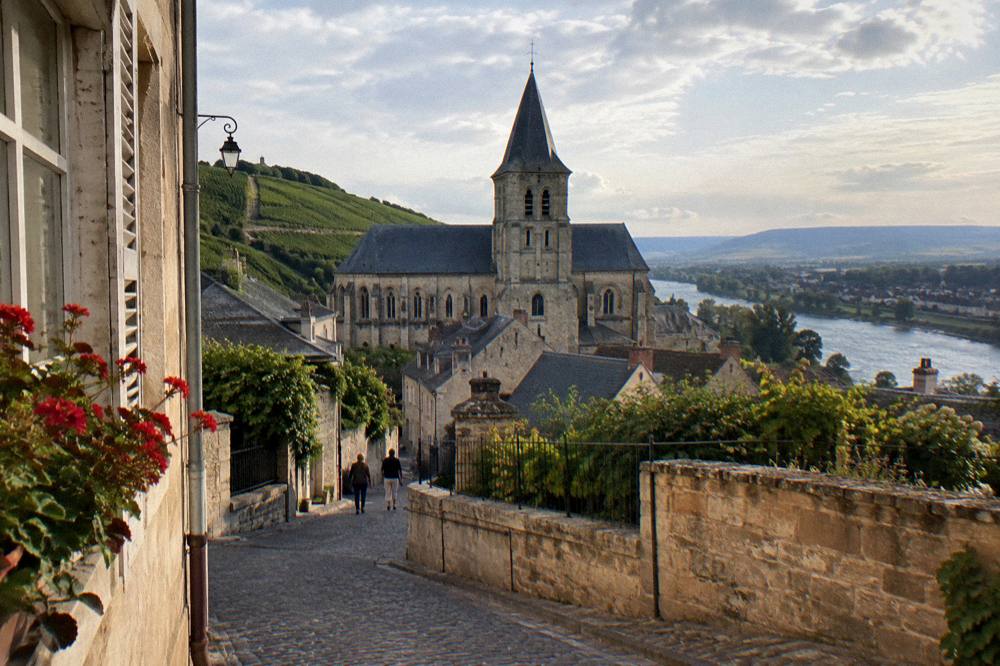
Two days beats one if the region is the trip's focus rather than a side trip. A first day built around the Reims champagne houses and a cathedral walk, a second around the villages and the lighthouse with a family-producer tasting, gives the plateau its due without rushing either half. Travelers with a single day should pick the tour whose stops match their priority, be it the lighthouse, Pommery or a grower's table.
However the route comes together, the plateau rewards the visit. It is where the appellation's body comes from, where the forest meets the vines, and where champagne stops being a label on a bottle and becomes a landscape you can stand inside.
If the planning is done and only the booking remains, the three Montagne de Reims days covered earlier on this page each work the same ground in a different style and price bracket.
Common Questions About The Montagne De Reims
What Is The Montagne De Reims?
A forested limestone plateau between Reims and Epernay, the northern heartland of pinot noir in the Champagne appellation and a regional park of vineyards, villages and viewpoints. Its Saint-Nicaise Hill cellars in Reims are part of the UNESCO Champagne inscription of 2015.
Can You Visit The Verzenay Lighthouse?
Yes, the lighthouse stands among the vines above Verzenay and appears as a stop on at least one Paris day trip, the Reims, Cellars and 4 Tastings tour from $202.00 per person. Opening arrangements change with the season, so check locally before planning a climb.
Which Champagne Villages Are Grand Cru In The Montagne De Reims?
Verzenay and Mailly-Champagne are grand cru villages on the plateau's slopes, the top classification in the appellation. Rilly-la-Montagne and Villers-sous-Chatillon also appear on tour routes through the region.
How Do You Get To The Montagne De Reims From Paris Without A Car?
Take the TGV from Paris Est to Reims, about 45 minutes, then join a half-day tour departing Reims that loops the plateau villages. Those tours start from $134.00 per person and exclude the train fare, unlike from-Paris day trips that bundle the drive.
How Much Does A Tour Through The Montagne De Reims Cost?
Shared and small-group days from Paris that cross the plateau run from $202.00 to $432.18 per person. Private days with a wine expert guide start at $961.30 per person, the smallest-booking rate, and half days from Reims run from $134.00 per person.
When Is The Best Month To See The Vineyards?
September and early October combine ripening vines with mild walking weather. Harvest runs mid-August to September, though the 2026 harvest began from 6 August, the earliest on record, about 14 days ahead of 2025.