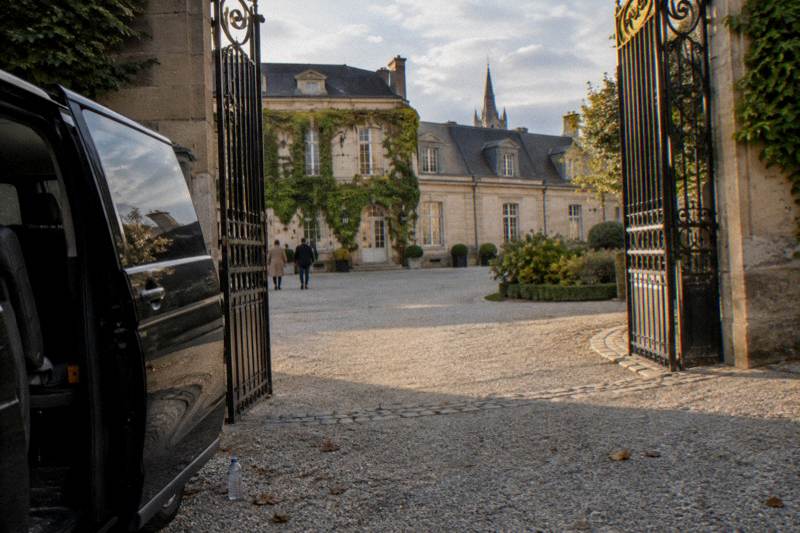
Can You Visit Veuve Clicquot Without A Tour?
Yes, you can book a Veuve Clicquot cellar visit directly without a guided bus day tour. Here is what the 36 EUR visit includes, how to book it, and when a Paris tour still makes sense.

Yes, you can visit Veuve Clicquot without a packaged tour: the house sells its cellar visits directly to individual travellers, and the entry-level Brut Yellow Label experience costs 36 EUR per person, including the UNESCO-listed Crayères beneath Reims. What you cannot do is walk in off the street, since every format requires a booked time slot, so your real choice is booking direct or using an operator.
The distinction matters more than most first-time visitors expect. "Without a tour" can mean two very different things. The first meaning is visiting without a multi-stop guided day tour, booking your own slot and traveling to Reims by train. That is entirely possible and, for confident travelers, often the cheaper and more flexible route. The second meaning is visiting without any booked experience at all, strolling up to the gates and looking around. That does not happen here: the cellars are working production sites reached through guided access, and the house sells its experiences as timed visits with a guide attached.
So the honest answer is that you can skip the packaged tour, but you cannot skip the booking step. The house's own booking page lists the available formats, dates and time slots, and advance booking is the norm because capacity per slot is limited. Anyone planning a summer weekend or a visit around a French public holiday should book well ahead rather than counting on same-day availability.
There is a third path worth naming early, because it splits the difference. Several day trips from Paris list Veuve Clicquot as a confirmed stop, which means the operator handles the train or van, the timing and the cellar reservation while you still get the guided visit inside. That is not "without a tour" in the strict sense, but it is without the work, and for many travelers it is the version that actually fits their trip. The rest of this page covers all three routes, what each costs, and where the trade-offs sit. If you're still deciding whether the guided cellar visit justifies its price, our honest review of the Veuve Clicquot tour covers exactly what the experience includes.
What The 36 EUR Brut Yellow Label Visit Actually Includes
The Brut Yellow Label visit, priced at 36 EUR per person, is the house's entry experience: a guided walk through the Crayères followed by a tasting of the signature Brut Yellow Label champagne. The Crayères are ancient Gallo-Roman chalk quarries, part of the UNESCO-listed Champagne Hillsides, Houses and Cellars inscription, sitting directly beneath the house in Reims. Higher-tier visits exist on the house's booking page; 36 EUR is the published figure for the standard format.
The value of the visit rests heavily on the underground setting. The chalk was quarried in Roman times, and the tunnels left behind became the ideal natural cellar: constant, cool and vast enough to age millions of bottles. The Champagne Hillsides, Houses and Cellars were added to the UNESCO World Heritage List in 2015, and the Saint-Nicaise Hill cellars in Reims, where Veuve Clicquot ages its wines, are one of the components of that inscription. Walking the Crayères is therefore not a decorative add-on to the tasting, it is the reason the visit exists.
What the price does and does not cover is worth spelling out. The 36 EUR figure covers the guided cellar walk and the tasting at the end of it. It does not cover transport to Reims, food, or any Champagne you decide to take home. Compared with the other big houses whose prices are published, it sits in familiar territory: Moët & Chandon in Épernay lists its entry tour at 48 EUR per person for a visit of about an hour and a half, with a Signature tier at 65 EUR. For houses such as Mumm, Ruinart or Taittinger, published visit prices are not available to confirm, so treat any number you see elsewhere for those with caution.
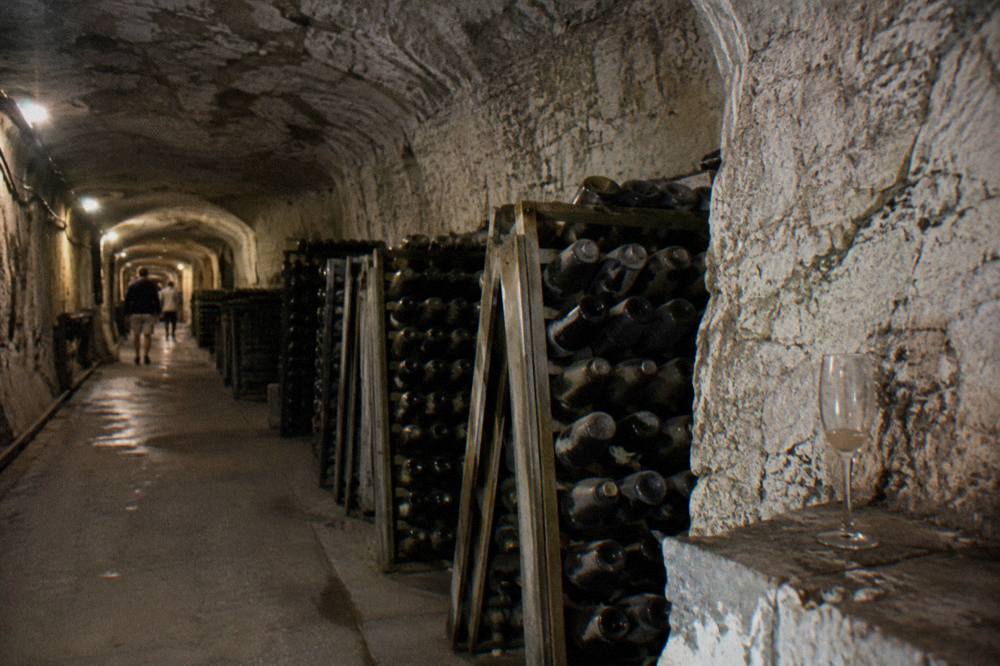
One practical note shapes the whole experience: the cellars are cool regardless of the season above ground. Pommery, another Reims house, states a cellar temperature of 10 C all year, and chalk cellars across the region behave the same way. A jacket is sensible even in August. The vineyard calendar also touches what you see: harvest runs from mid-August to September, and pressing houses are at their busiest then, while November to March is pruning season and the cellars are at their quietest.
How To Book A Veuve Clicquot Visit Yourself
Book directly through the house's own website, where the visits are sold at face value. Pick a date, pick a format, and take a timed slot; the 36 EUR Brut Yellow Label option is the entry choice. Slots for weekends and summer dates fill first, so booking two or more weeks ahead is the safe play. Always check the house's booking page for the dates and formats currently on sale.
The mechanics are simple but the timing discipline is not optional. Each slot has a fixed start time, visits run with a guide in groups, and late arrival can mean a missed visit rather than a delayed one. Plan to be at the house in central Reims with time to spare. If you are combining the visit with a look at the city, Reims Cathedral is a short distance away and is itself a UNESCO World Heritage Site, inscribed in 1991 as part of the cathedral, Saint-Remi Abbey and Palace of Tau group. The cathedral towers can be climbed only on booked guided tours during limited seasons, and the Palace of Tau is closed for renovation until 2027, so set expectations accordingly.
Getting to Reims independently is the other half of the booking task. The TGV from Paris Est covers the distance in about 45 minutes, which makes a self-guided day entirely realistic: a morning train, a midday visit to the cellars, lunch, the cathedral, and an evening train back. For fares and times, SNCF Connect is the source of record, and no fare figure should be trusted from anywhere else. Reims city center is compact enough that the walk from the station to the main sights is manageable for most travelers.
| Step | What to do | Watch out for |
|---|---|---|
| Choose a date | Check the house's booking page for open dates | Weekend and summer slots fill first |
| Pick a format | Brut Yellow Label visit at 36 EUR is the entry option | Tiers above the 36-euro visit cost more |
| Book the train | TGV from Paris Est, about 45 minutes | Book the train after the cellar slot exists |
| Plan the day | Cellar visit, cathedral, lunch in between | Arrive early for the fixed start time |
| Pack | A layer for the cool cellars | 10 C underground regardless of season |
The independent route suits travelers who like control and do not mind logistics. It costs the 36 EUR visit plus the train, and it leaves lunch and any second stop to you. What it does not give you is a driver-guide explaining the region, a grower estate for contrast, or anyone to fix things if a train runs late. For a deeper comparison of the two approaches, the page on tour versus train travel in Champagne works through the trade-offs in detail.
When A Paris Day Tour Is The Better Answer
A tour earns its fee when the logistics of the day matter more than the saving: families, tight schedules, first-time visitors, and anyone who wants a grower estate or a second grand house on the same day. Day trips from Paris that stop at Veuve Clicquot handle the transport, the timing and the reservation, with hotel pickup and free cancellation on most departures. The trade is price: from-Paris days run higher than a train ticket plus 36 EUR.
The clearest case for a tour is the private half day built around the house itself. The Private Veuve Clicquot Champagne Half-day Trip from Paris runs 9 hours with hotel pickup listed and free cancellation listed, from $555.00 per person. As with any private trip, that per-person from-price is the rate for the smallest booking rather than a total, so check the pricing basis on the operator's booking page before comparing it against anything. What it buys is the thing the independent route cannot: a door-to-door day with the cellars as the centerpiece rather than one stop on a crowded schedule.
A different flavor of the same idea pairs Veuve Clicquot with Moët & Chandon on a single private day. The Moet et Chandon Veuve Clicquot Private Champagne Trip from Paris runs 12 hours, lists hotel pickup and free cancellation, and stops at Moët & Chandon, Épernay, the Abbaye Saint-Pierre d'Hautvillers, Veuve Clicquot and Reims Cathedral. It is rated 4.5 across 23 reviews and priced from $712.71 per person, again on the private per-person basis. For a traveler whose real goal is "the two famous houses in one day", this format removes the impossible-seeming task of fitting Épernay and Reims into one self-planned train day.
Shared and small-group options cut the price further. The region's small-group day trips from Paris run from $202.00 to $432.18 per person depending on inclusions, with lunch-included formats appearing at several points in that span. A useful rule of thumb when comparing: check what the price flags actually say. Lunch included, hotel pickup listed and a stated number of tastings are the three inclusions that most often explain a price gap between two otherwise similar days. A cheaper day that lists no lunch is not a bargain if you were counting on one.
For travelers who end up in Reims without a cellar slot at all, the city still has a tasting answer. The Reims City Center Champagne Tasting runs about an hour in the city center from $50.00 per person, rated 4.83 across 111 reviews, with free cancellation listed. It is a tasting rather than a cellar walk, so it is not a substitute for the Crayères, but it rescues a day when the house's calendar is full.
Is Visiting Veuve Clicquot Worth It?
For most Champagne-curious visitors, yes: the Crayères are among the most atmospheric cellars in the region, the 36 EUR entry price is in line with the other grand houses, and the story of the house gives the visit a narrative arc few competitors match. The honest caveat: the basic visit lasts just one hour, and the four-cuvée tasting costs 80 euros and the visit is a guided production, not a leisurely afternoon.
The house's history is genuinely unusual. Barbe-Nicole Clicquot Ponsardin took over the business as a young widow and pushed innovations that reshaped Champagne, including advances in riddling that made crystal-clear wine possible at scale. Her name is on the label today, and the visit leans into that story. Travelers who arrive knowing nothing of it tend to leave with the version of Champagne history that sticks, the one where a single stubborn businesswoman bent an entire industry toward her methods and cellar visits at the house she ran still start at 36 EUR.
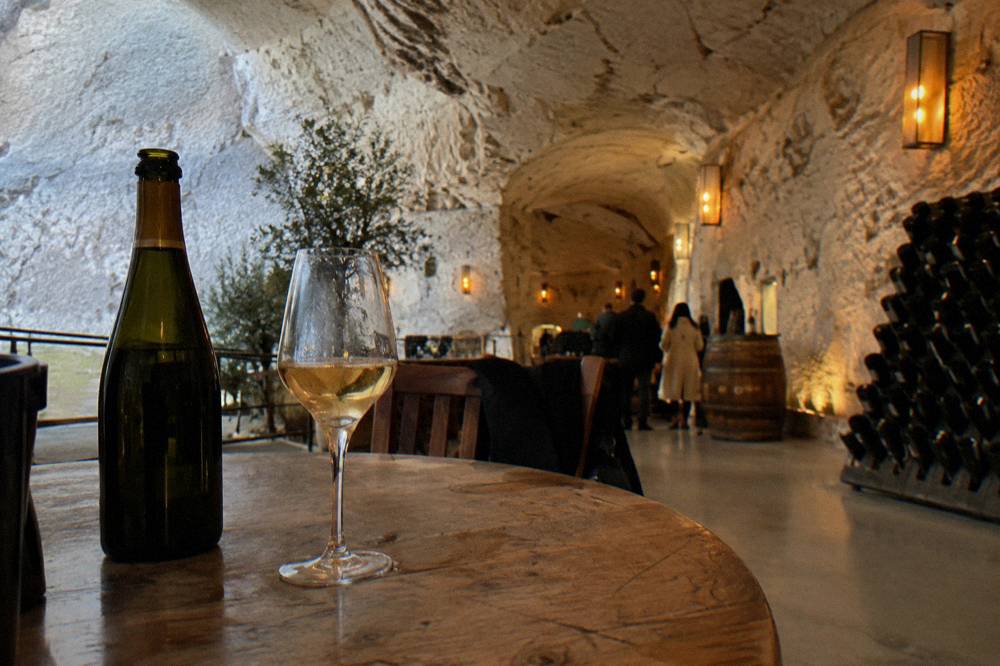
Context helps set expectations too. The Champagne appellation spans 34,200 hectares across 319 villages, with 16,460 growers and 410 houses shipping 266.1 million bottles in 2025, per the Comité Champagne's own figures. Veuve Clicquot is one of the largest of those 410 houses, and the scale shows: the cellars feel industrial in the best sense, cathedral-sized tunnels of stacked bottles. Travelers who prefer intimate, family-run settings sometimes find the grand houses impersonal and are better served by a small grower visit, where the person pouring probably grew the grapes.
Seasonality is the last variable. The 2026 harvest was the earliest ever recorded in Champagne, with first picking from 6 August and the ban announced 12 August, and the Comité described the fruit as reaching maturity in exceptional condition. A visit during the harvest window sees the region at full intensity; a winter visit sees quiet cellars and shorter days, with averages in Reims around 5.7 C maximum in January against 24.7 C in July, and roughly nine to eleven rainy days per month year-round. Neither is wrong, but they are different trips, and the packing list changes more than most visitors expect between the two.
A little planning goes a long way here. The 36 EUR Brut Yellow Label visit is the cheapest route into the Crayères., so fix your dates and book through the house's booking page early, comparing the higher tasting tiers there before settling on the basic option. Since the cellars sit beneath Saint-Nicaise Hill, one of the three components of the 2015 UNESCO inscription, the walk down is part of a World Heritage site, which is a reasonable way to frame the ticket price for travelers who hesitate at it.
Timing is the other lever. For harvest intensity, plan around the picking window, which in 2026 opened on 6 August, the earliest start on record. For quiet, come in the winter months, when Reims tops out around 5.7 C in January against 24.7 C in July and the cellars are at their calmest. Pack for rain whenever you go: with roughly nine to eleven rainy days per month year-round, a waterproof layer earns its place in the bag in every season.
Planning A Veuve Clicquot Day Without A Tour Operator
A self-planned day looks like this: a morning TGV from Paris Est, about 45 minutes to Reims, the booked Brut Yellow Label visit at 36 EUR, the cathedral, lunch, and an evening return. Add a Reims tasting or a second stop only if the timing genuinely allows it. The whole day hinges on the cellar slot, so book that first and build the train times around it, not the other way round.
Reims rewards a slow afternoon. Beyond the cathedral, the city holds the Saint-Nicaise cellar district, Art Deco facades rebuilt after the First World War, and the Musee de la Reddition, the schoolhouse where the German surrender of May 1945 was signed, open daily except Tuesdays. If the day runs long, Épernay and its Avenue de Champagne make a compelling second city, though fitting Reims cellars, the cathedral, Épernay and a return train into one self-directed day is ambitious; tours exist precisely because it is. For travelers weighing the two cities, the comparison of Reims versus Épernay breaks down what each does best.

| Route to the cellars | Booking burden | Rough cost shape | Best for |
|---|---|---|---|
| Book the house plus train | You handle slot, trains, timing | 36 EUR visit plus train fare | Confident, flexible travelers |
| Private half day from Paris | Operator handles all of it | From $555.00 per person, private basis | A cellars-centered, door-to-door day |
| Private two-house day | Operator handles all of it | From $712.71 per person, private basis | Veuve Clicquot and Moët in one day |
| City-center tasting in Reims | Minimal, short notice often works | From $50.00 per person | A fallback when cellar slots are gone |
Whatever route wins, the cellar slot is the scarce resource. Grand-house visits across Reims and Épernay sell on dated, timed inventory, and the busiest windows are summer weekends and the weeks around French public holidays. Winter weekdays are the softest target if your dates are flexible. Browse every day trip and tasting at Champagne Tours From Paris once the dates are settled, and read the companion piece on whether the Veuve Clicquot tour is worth it before committing to a format.
Common Questions About Visiting Veuve Clicquot
Can You Visit Veuve Clicquot Without A Tour?
Yes, but not without a booking. The house sells its cellar visits directly to individuals, starting with the 36 EUR Brut Yellow Label visit. A packaged day tour is one way to get in, not the only way; the train from Paris plus a self-booked slot works just as well for travelers who like planning their own day.
Is Visiting Veuve Clicquot Worth It?
For most visitors, yes. The Crayères are part of a UNESCO World Heritage inscription, the entry price of 36 EUR is in line with other grand houses, and the house's history gives the visit a strong story. It is a guided, timed production rather than an intimate tasting, so travelers seeking small-producer warmth may prefer a grower visit.
How Far In Advance Should You Book The Cellar Visit?
As early as your dates allow, especially for summer weekends and holiday periods. Slots are timed and capacity is limited per group. Check the house's own booking page for the dates currently on sale, since availability changes with the seasons.
Can You Get To Veuve Clicquot From Paris By Train?
Yes. The TGV from Paris Est reaches Reims in about 45 minutes, and the cellars are in the city. Use SNCF Connect for fares and times, and book the train only after the cellar slot is confirmed so the day is built around the fixed visit time.
Is The Veuve Clicquot Visit Suitable For Children Or Non-Drinkers?
Families do visit, but the core of the experience is a guided walk and a champagne tasting, and age policies sit with the house rather than with any general rule. Check the house's booking page for its current policy before booking, and note the cellars stay cool all year, around 10 C in comparable Reims cellars.