Does Champagne Have To Come From France To Be Called Champagne?
Yes, by law and by definition real Champagne comes only from a defined region about 45 minutes by TGV from Paris. Here is what that means, what the houses add, and how to taste it.
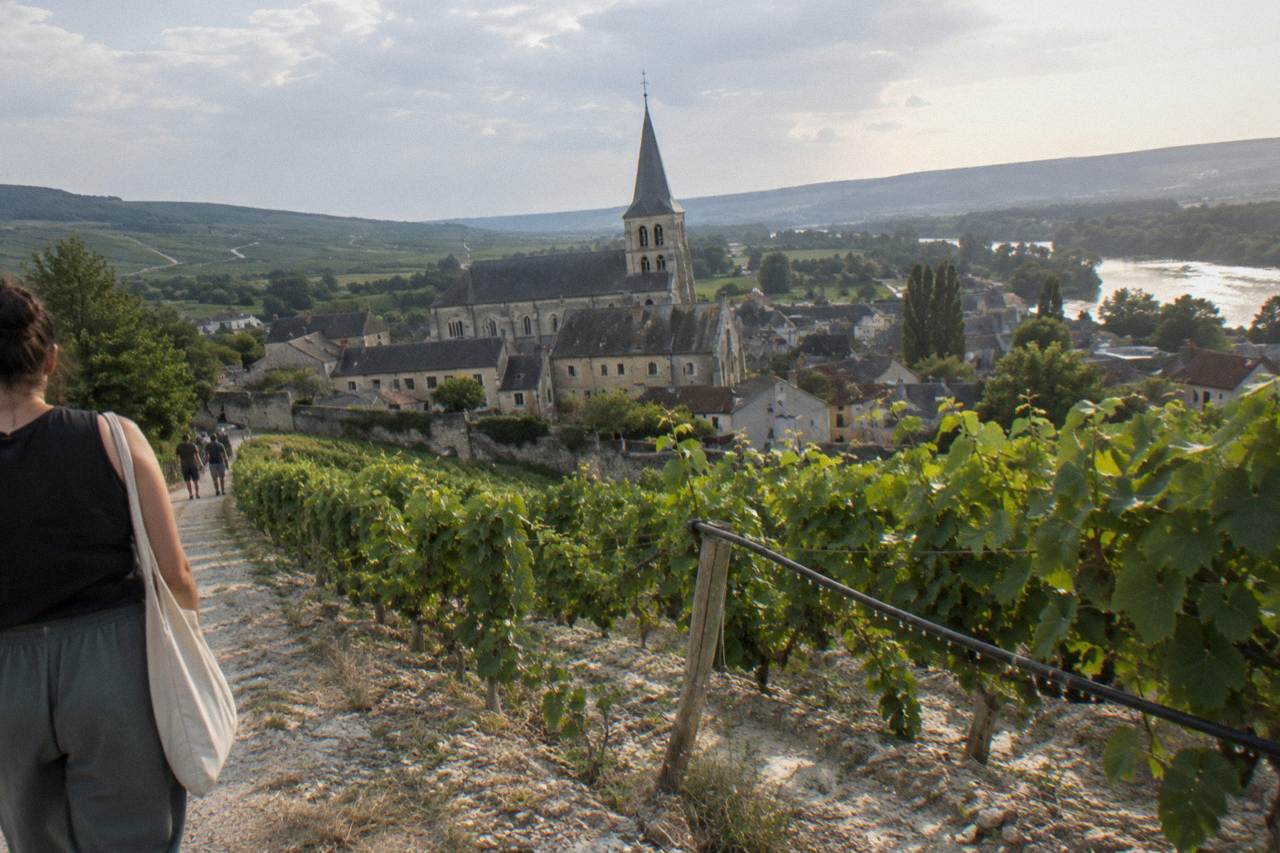
Yes. A sparkling wine can only legally carry the name Champagne if the grapes were grown and the wine was made inside a defined appellation of northeast France, roughly 150 kilometers from Paris. Official Comité Champagne figures describe 34,200 hectares across 319 villages, worked by 16,460 growers and sold through 410 houses. Everything else is sparkling wine, whatever the bottle looks like.
That is the whole rule in one sentence, but the story behind it explains a great deal about why the region works the way it does, why visits are booked and paid, and why a day trip from Paris is structured around cellars rather than beaches. The name is protected in the European Union, and France defends it actively in other markets too. Producers in California, Australia or England may make excellent sparkling wine using the same traditional method, and many do, but on a label bound for Europe the word Champagne must refer to the French region or nothing at all.
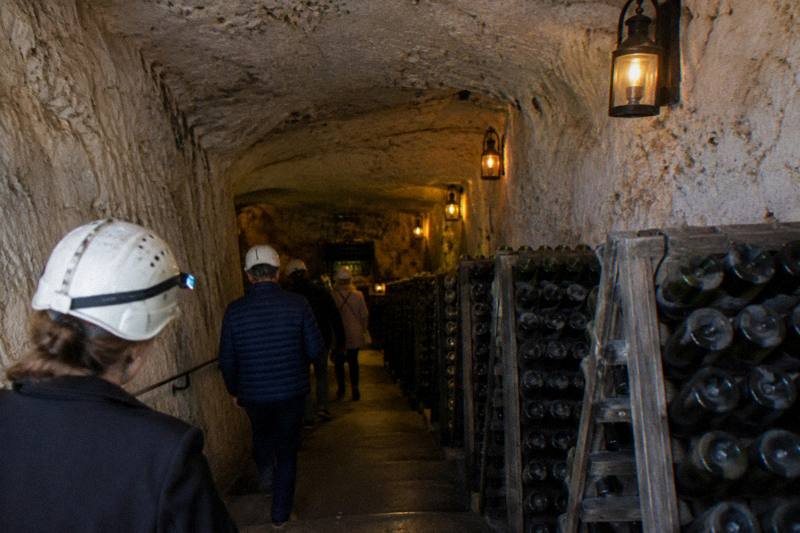
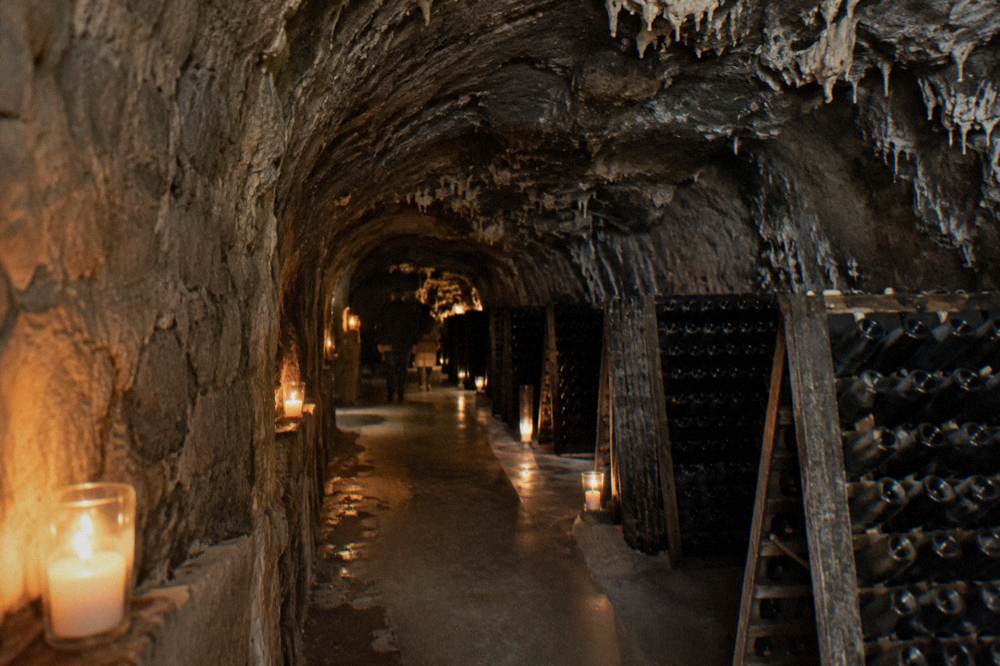
The protection exists because the place genuinely shapes the wine. The vineyards sit on deep chalk soils, the legacy of an ancient sea, and that chalk does two jobs at once: it drains excess water in wet years and stores it in dry ones, and it gives the cellars their cool, stable atmosphere. Houses dug their cellars straight into that chalk, and several of the largest networks, like the 28 kilometers of tunnels under Moët & Chandon in Épernay, are older than the appellation rules themselves.
For a visitor, the practical consequence is simple: to taste genuine Champagne in the place that owns the name, you go to the region, and the region is close enough to Paris for a day trip. Trains reach Reims from Paris Est in about 45 minutes, and dozens of guided options run daily. A full-day trip from Reims such as the Reims nine-tasting day trip packs in nine tastings with lunch for from $279.38 per person, while Paris departures like the 8 Tastings, Lunch Included small-group day run from $364.00 per person with hotel pickup.
What Actually Defines The Champagne Region?
The appellation covers 34,200 hectares of vines across 319 villages, spread over five departments and three main zones: the Montagne de Reims, the Vallée de la Marne and the Côte des Blancs. Only wine from those vines, made to the appellation's rules, may be called Champagne. The Comité Champagne, the industry body that publishes those figures, counts 16,460 growers and 410 houses inside the boundary.
The zone sits on the northern edge of viable viticulture, at roughly the same latitude as some of the coldest vineyard land in France, and that marginal climate is part of the style. Grapes ripen slowly, keeping acidity high, which is exactly what a sparkling wine built for years of bottle aging needs. Climate data for the Reims-Courcy station shows average daily highs of about 24.7 degrees in July and about 5.7 degrees in January, with rain falling on 114.4 days a year, so both frost and humidity are constant threats the growers manage by hand.
The three zones specialize. The Montagne de Reims, south of the city, leans on Pinot Noir for structure. The Côte des Blancs, south of Épernay, is Chardonnay country and gives the region its raciest, longest-lived wines. The Vallée de la Marne, following the river, favors Pinot Meunier, the grape that ripens most reliably in cold years and gives soft fruit. Most Champagne is a blend of all three, across villages and often across harvest years, which is one reason the large houses matter so much to the final product.
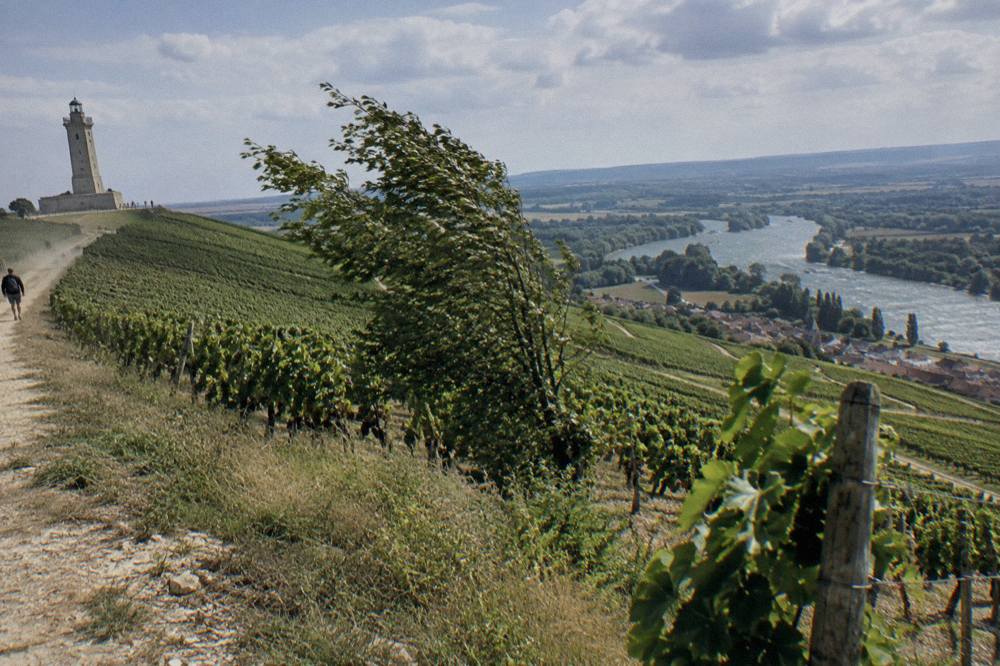
One point that surprises many visitors: the production rules reach past the vineyard into the cellar. Hand harvesting is required, pressing yields are capped, and the wine must age in bottle on its lees for a minimum period before release. The point of all of it is that the name describes a process rooted in one place, not simply a bubble. Sparkling wine made the same way in another region of France is called Crémant, and it is often good value, but it is not Champagne and its producers do not claim it is.
For readers who want the full picture of how the bubbles get there, the guide on how Champagne is made walks through fermentation, blending and riddling step by step, with the same official appellation figures behind it.
What Do The Champagne Houses Of France Add To The Name?
The 410 houses of the appellation buy grapes from growers, blend across villages and vintages, and age the wine in the chalk cellars that made towns like Reims and Épernay famous. The largest, including Moët & Chandon and Veuve Clicquot, sell the non-vintage blends that define the style worldwide, and their cellars are the main reason tourists visit at all.
A house is not simply a winery. Most own some vines but buy far more fruit from the 16,460 growers, and the cellar master's skill lies in blending that fruit into a consistent house style year after year. That is why a bottle of a big house's flagship tastes the same in Tokyo and Toronto, and why the brand names carry such weight: they are promises of a blend, anchored to the region. The chalk cellars, dug over centuries, hold millions of bottles at a naturally stable temperature, and visiting them is closer to touring a cathedral than a factory.
The two most visited houses publish their entry prices. Moët & Chandon in Épernay offers a cellar tour and tasting at 48 EUR per person, with a Signature version at 65 EUR, each lasting about an hour and a half. Veuve Clicquot in Reims prices its Brut Yellow Label tour at 36 EUR. For other major houses, including Mumm, Ruinart and Taittinger, prices and hours belong on each house's own booking page, and tours that stop there fold the visit into the day's fare.
| House visit | Location | Entry price | What the price covers |
|---|---|---|---|
| Moët & Chandon | Épernay | 48 EUR | Cellar tour of about 1 hr 30 min plus tasting |
| Moët & Chandon Signature | Épernay | 65 EUR | Longer tasting including a Grand Vintage |
| Veuve Clicquot Brut Yellow Label | Reims | 36 EUR | Cellar tour plus one tasting |
Guided day trips bundle several of these stops into one fare, which suits travelers who would rather not juggle separate house bookings. The Champagne Cellars Tour with a Sommelier, a small-group Paris departure capped at seven guests, includes Hautvillers, the Pressoria museum, the Avenue de Champagne and both Moët & Chandon and Charles Mignon, from $291.00 per person.
Can Sparkling Wine Made Elsewhere Call Itself Champagne?
Inside the European Union, no. The name is reserved for wine from the French appellation, and bottles sold there must respect it regardless of where they were made. In some other markets, including a lingering grandfathered usage in parts of the United States, a small number of long-established domestic producers still use the term on domestic sales, though exports and most modern labels do not.
The grandfathered American usage is the source of most confusion. Some California sparkling producers who used the word on labels before the relevant agreements keep limited domestic rights to it, and a few consumers grew up seeing "California Champagne" on shelves. Outside those narrow cases, quality producers everywhere label honestly: Crémant in other French regions, Cava in Spain, Franciacorta in Italy, and simply sparkling wine or traditional method elsewhere.
None of this is a judgment about quality. Traditional-method sparkling wine from outside Champagne can be outstanding and usually costs less. The distinction is about origin, and the French region has earned the right to its name the long way: chalk soils, a marginal climate, hand harvesting, mandatory bottle aging, and several centuries of trade that built the houses. When you pay for Champagne, a large part of what you pay for is that system.
For visitors, the interesting part is that the name and the place are inseparable in experience too. Tasting Crémant in a supermarket tells you almost nothing; standing in a Gallo-Roman chalk quarry eighteen metres under Taittinger, or on the Avenue de Champagne with the great houses lined up along it, explains the price of the bottle in a way no label can. Those cellars are working production sites, which is why houses ask visitors to book ahead and why guided tours that guarantee the stops are worth considering for a single-day visit.
Why Do The Cellars And Vineyards Carry UNESCO Status?
UNESCO inscribed the Champagne Hillsides, Houses and Cellars on the World Heritage List in 2015, covering 1,101.72 hectares across the historic vineyards of Hautvillers, Aÿ and Mareuil-sur-Aÿ, Saint-Nicaise Hill in Reims, and the Avenue de Champagne in Épernay. Reims Cathedral, Saint-Rémi Abbey and the Palace of Tau were inscribed separately, in 1991, and the cathedral alone hosted the coronation tradition tied to twenty-five royal coronations.
The 2015 inscription is unusual because it honors a working landscape rather than a monument. The listed sites are the places where the champagne method was systematized: the hillside vineyards where it was perfected, the chalk cellars where it is aged, and the grand avenue in Épernay where the houses built their headquarters above their tunnels. Saint-Nicaise Hill in Reims is honeycombed with crayères, the Gallo-Roman chalk quarries later converted into cellars, and the Veuve Clicquot tour passes straight through them.
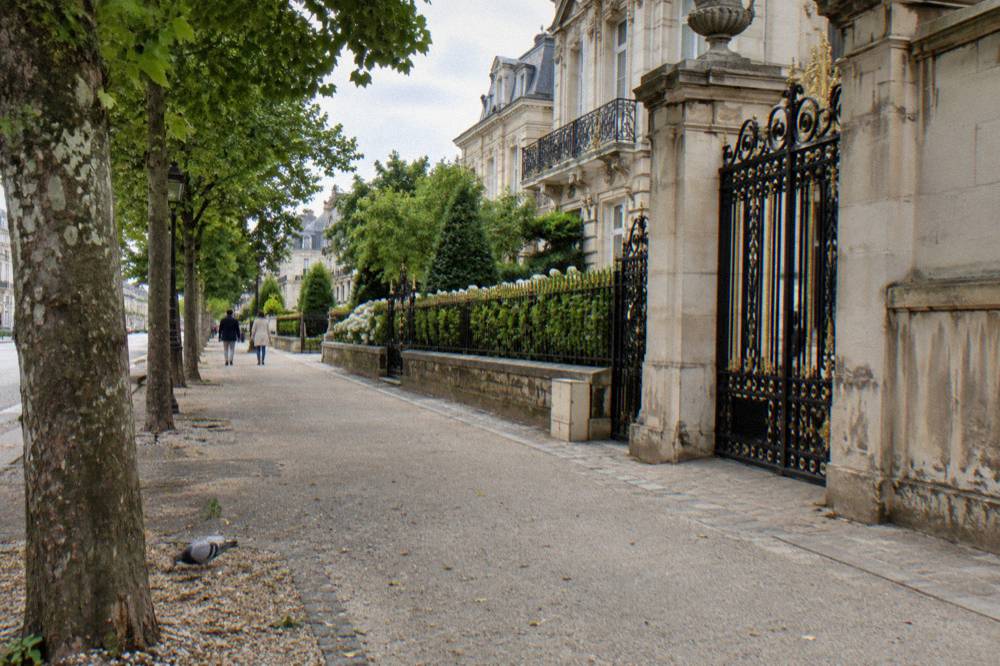
Practical note for planners: Hautvillers Abbey itself is closed to visitors, as private Moët & Chandon property, though the village around it is charming and open. The Palais du Tau in Reims is closed for renovation until 2027. Reims Cathedral is freely visitable and remains the single most impressive free sight in the region. A Champagne region tour from Paris that pairs the cathedral with cellar visits makes the UNESCO story tangible in a day.
The double inscription, cultural landscape in 2015 and monuments in 1991, is why so many itineraries pair Reims and Épernay. Reims carries the history: coronations, gothic architecture and the crayères beneath Saint-Nicaise. Épernay carries the commerce: the avenue where the houses display their wealth, and the tunnels where the wealth literally sits aging. A day trip that includes both, such as the Cathedral Stop trip from Paris (from $391.00 per person, lunch included, rated 4.83 across 726 reviews), covers both halves of the World Heritage story.
Where Does A First-Time Visitor Actually Taste Champagne In France?
Most first visits run through three doors: a guided day trip from Paris or Reims, a direct house booking in Épernay or Reims, or a short city tasting that fits inside another trip. Paris departures run from $202.00 to $432.18 per person for shared and small-group days; Reims-based day trips run from $134.00 to $286.00; and standalone tastings in Reims or Épernay start at $19.00.
Each door suits a different traveler. The Paris departure is the one-bullet answer: a van collects you at your hotel, someone else handles the driving, and the day includes tastings, often lunch, and sometimes the cathedral. The 8 Tastings, Lunch Included day from Paris is the most reviewed option of this type, rated 4.81 across 1,780 reviews, from $364.00 per person in a group capped at eight. Budget-conscious travelers can take the Base Fare small-group trip, from $257.00 per person with hotel pickup, rated 4.76 across 64 reviews, and buy their own lunch.
Staying in Reims or Épernay instead changes the arithmetic. Tours based there exclude the Paris transfer but cost far less: the Morning Tour with two small family producers runs from $134.00 per person for four hours, and the Family-Run Wineries half day from $146.00 per person, rated 4.78 across 879 reviews. The three-tastings-an-hour cellar visit in Épernay at from $19.00 per person is the cheapest way to taste inside the appellation at all, though it is a tasting, not a day trip, and should never be compared like for like with a Paris departure.
Short on time or traveling solo without a car, the guided day remains the easiest entry. The 6 Tastings day from Paris, from $262.28 per person and rated 4.8 across 1,034 reviews, threads Nicolas Feuillatte, the Hautvillers abbey site, Reims Cathedral and Épernay into eleven hours. Whatever the choice, book ahead: house places are limited and the houses themselves say advance booking is the safe route.
How Much Does A Champagne Tasting Or Day Trip Cost?
Standalone tastings in Reims or Épernay run from $19.00 to $56.00. Day trips based in Reims or Épernay run from $134.00 to $286.00 per person. Shared and small-group day trips from Paris run from $202.00 to $432.18 per person, with the cheapest Paris small-group option rated 4.5 or higher at from $257.00. Every figure is a from-price on the operator's booking page.
The spread reflects inclusions more than quality. At the bottom of the Paris range sits a shared 4-tasting day at from $202.00 per person, rated 4.25 across 21 reviews, a budget option that trades polish for price. In the middle, small-group days with hotel pickup and eight tastings plus lunch land in the mid $300s. At the top, the Lanson-visit small-group day at from $432.18 per person, rated 5.0 across 93 reviews, concentrates on grower estates and a famous house in a group of eight.
| Product type | Price range (per person) | Typical inclusions |
|---|---|---|
| Short tasting, Reims or Épernay | $19.00 to $56.00 | Guided cellar visit, 1 to 3 tastings, 1 to 2 hours |
| Day trip based in Reims or Épernay | $134.00 to $286.00 | Grower visits, 6 to 9 tastings, often lunch, 4 to 8 hours |
| Shared or small-group day from Paris | $202.00 to $432.18 | Transport, house and grower stops, often lunch, 10 to 13 hours |
Private days are a different product again, from $555.00 per person for a Veuve Clicquot-focused nine-hour trip upward, and those from-prices describe the rate for the smallest booking rather than a total for a group. The main advice is to compare on the inclusions the booking page actually flags, hotel pickup, lunch, number of tastings, and group size, rather than on the headline number. The guide on what a Champagne tour costs breaks the tiers down in more detail.
When Is The Best Time To See The Harvest Region?
Mid-August to late September is harvest season, and the 2026 picking began on 6 August, the earliest start ever recorded in the region and about two weeks ahead of 2025. May through September offers the warmest, driest stretch, with July the driest month on the Reims averages at about eight rain days. Vineyard scenery peaks from veraison in August through the golden leaves of October.
The 2026 season rewrote the calendar. The Comité Champagne announced the harvest ban on 12 August with picking already underway from 6 August and widespread from 17 August, driven by a hot, dry summer that produced moderate yields and grapes in exceptional condition. Visitors who arrived in late August saw the region at its busiest and most vivid: tractors on the village lanes, pickers in the rows, and presses running through the night.
For everyone else, the shoulder months are the sweet spot. September brings warm days and puts you right inside the harvest window, when picking is underway across the region. October brings color and the first frost-bright mornings. Winter visits are perfectly workable, the cellars hold their 10-degree chill at Pommery year round and Moët asks for warm clothing regardless of season, but the vines stand bare and some daylight hours are short for photography. The houses do not close wholesale in winter; hours simply vary by house, so the booking page is the reference.
Any month works for the cellars themselves, which is the honest answer for a day trip from Paris: the bottles age underground whether or not the vines are green. If the landscape matters to you, aim for late May through early October; if only the tasting matters, book whatever date suits and spend the difference on a better tour.
Common Questions About Champagne And France
Does Champagne Have To Come From France To Be Called Champagne?
Yes. The name legally belongs to a defined appellation of northeast France covering 34,200 hectares across 319 villages. Sparkling wine made anywhere else, even by the same method and the same grapes, must be labeled as sparkling wine, Crémant, Cava or another regional name.
France Champagne
French Champagne comes from the appellation around Reims and Épernay, about 45 minutes from Paris by TGV. The region combines chalk-soil vineyards, deep cellar networks under both towns, and 410 houses that blend and age the wine on site.
Champagne Houses France
The appellation counts 410 houses, including Moët & Chandon and Veuve Clicquot in Épernay and Reims respectively. Entry-level house visits cost 48 EUR at Moët & Chandon and 36 EUR at Veuve Clicquot, each including a cellar tour and tasting.
Champagne House France
A Champagne house is a producer that blends grapes from the region's 16,460 growers into a consistent style and ages the wine in chalk cellars. Visits typically combine a walk through the cellars with a tasting of the house's flagship cuvées.
Champagne Houses In France
Most houses cluster in two towns: Reims, home to Veuve Clicquot, Taittinger and Pommery among others, and Épernay, home to Moët & Chandon and the Avenue de Champagne. Day trips from Paris usually pair one town with a grower estate in between.
Champagne Of France
The region shipped 266.1 million bottles in 2025, and its vineyards, houses and cellars were inscribed by UNESCO as a World Heritage cultural landscape in 2015, alongside Reims Cathedral's 1991 inscription. To compare what is actually bookable right now, start with Champagne Tours From Paris.