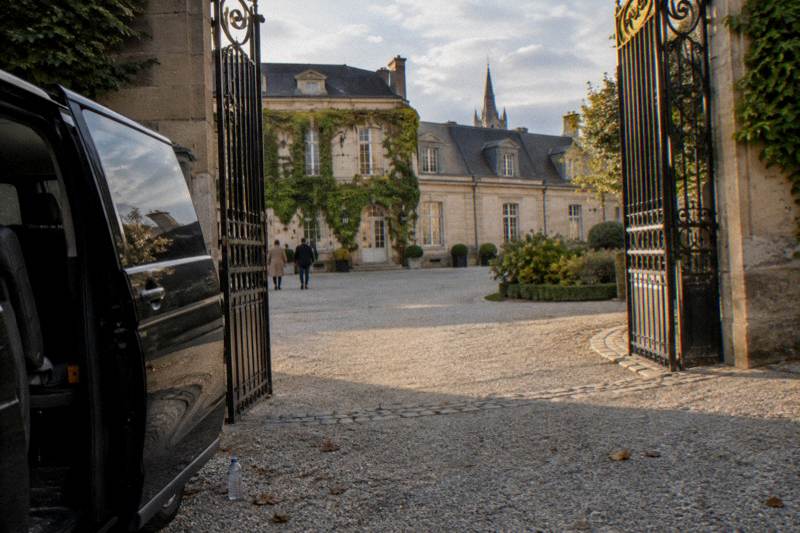
How Do You Pronounce Veuve Clicquot?
Veuve Clicquot is pronounced vuhv klee-KOH. A plain guide to saying it, what the name means, what the house charges for a cellar visit, and how to see the Reims cellars on a day trip from Paris.
Veuve Clicquot is pronounced roughly vuhv klee-KOH: the first word rhymes with love, with a soft v at the end, and the second rhymes with go, stressed on the second syllable with a silent final t. Written out for English speakers, the whole name comes out as vuv klee-KOH, three syllables in total, nothing more.
That is the short answer, and it settles the question almost every visitor asks within a minute of landing in Reims or Épernay. The name trips people up for two reasons. French does not pronounce the final t in Clicquot, and the qu pairing makes an English speaker want a kw sound that simply is not there. Clicquot is klee-KOH, close to the word cliché in its rhythm, not klik-kwot and not klee-kwah.
The first word is easier than it looks. Veuve, meaning widow, is one syllable and a half: vuhv, with a soft v at both edges. Say the word love, replace the l with a v, and you have it. Put together, vuhv klee-KOH carries the stress on KOH and nothing else. Waiters, cellar guides and shop staff in Champagne will understand a mangled attempt anyway, but saying it correctly buys a small nod of respect in a region where the name is on bus shelters.
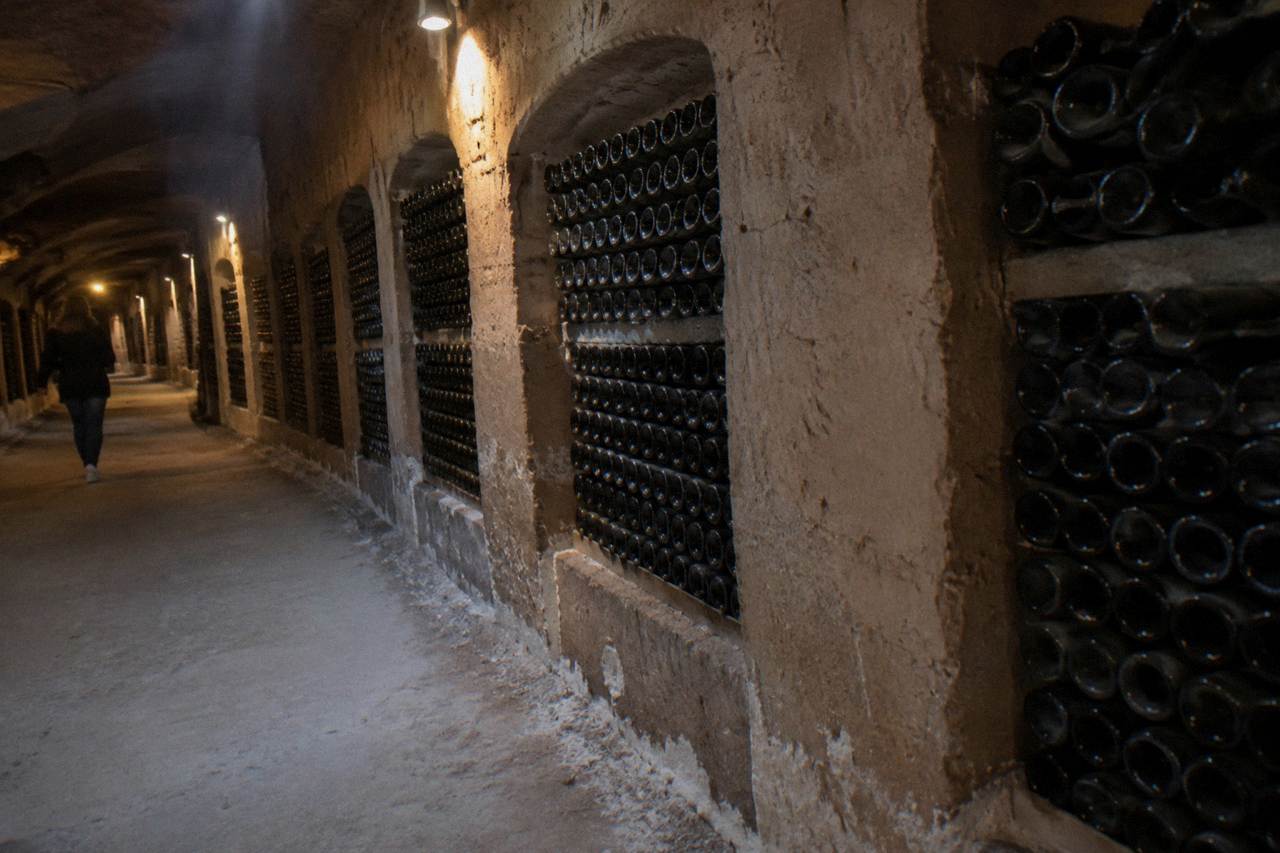
Why does a champagne house carry the word widow at all? The story behind the label explains the name, and it is one of the better stories in the region. It also explains why so many tours from Paris route through this particular house in Reims, whose cellars run through chalk quarries old enough to carry UNESCO listing.
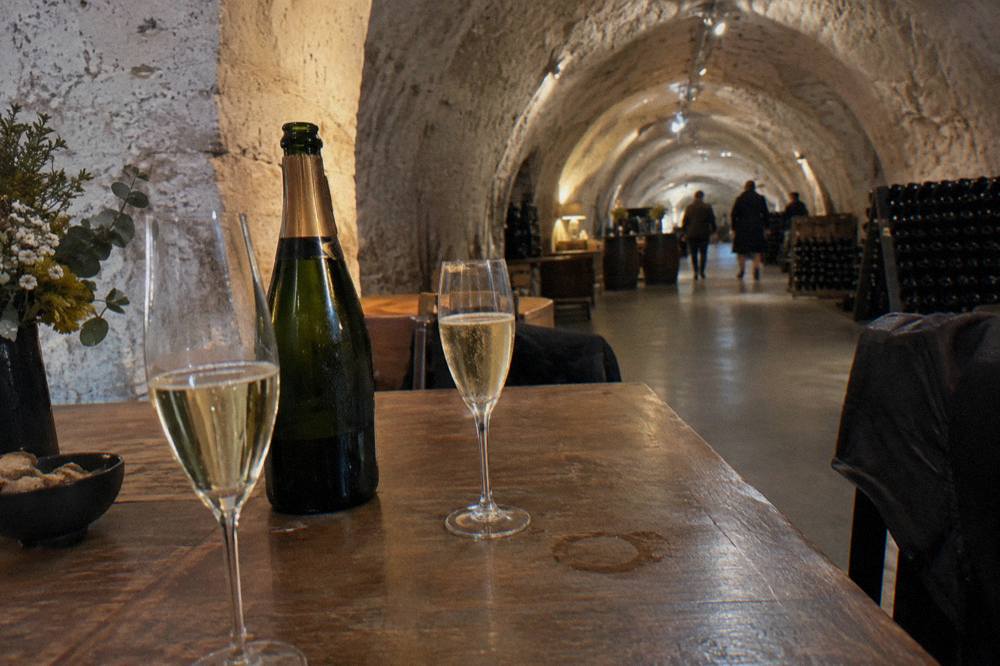
For travelers who want to see the house rather than just order it, three day trips stand out for the way they handle the name's home ground.
What Does The Word Veuve Actually Mean?
Veuve is simply the French word for widow, and it sits on the label because the house was built by one: the young widow of the Clicquot family took over the champagne business and ran it into one of the great houses of Reims. The name on the bottle is a memorial, not a family brand. Local tradition credits her with taking charge of the enterprise as a young widow, at a time when a woman running a wine business was close to unheard of. The label kept the Clicquot family name and put the word widow in front of it, and it has never come off.
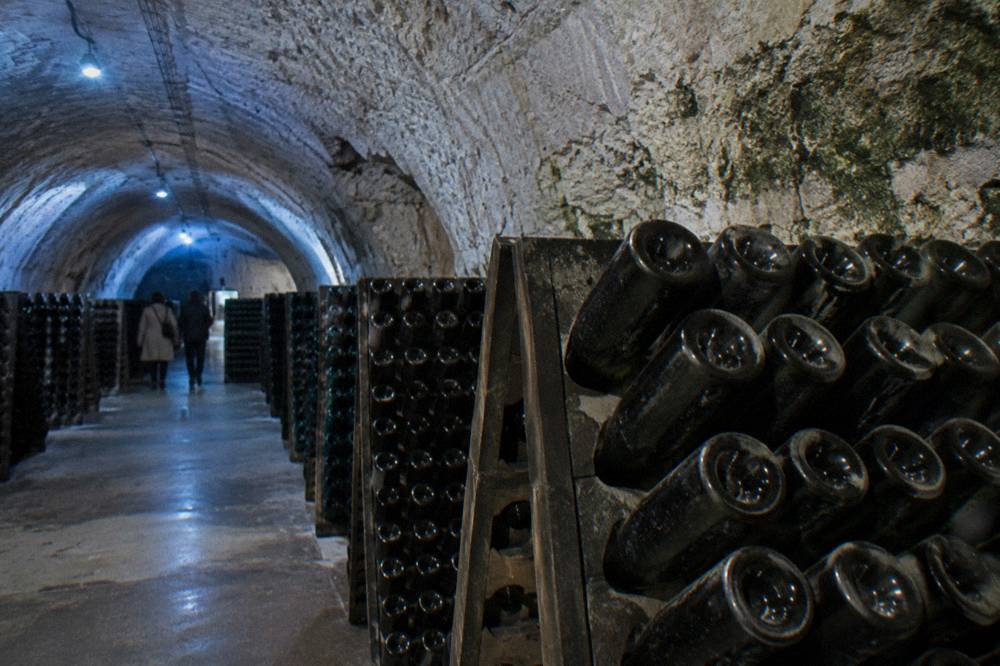
Her reputation in the region rests on real inventions. She is credited with an early method of clarifying champagne by resting bottles upside down in racks and turning them, so the sediment collected in the neck and could be removed without losing the wine's sparkle. She also pushed the house into distant markets early, shipping champagne to far-off buyers the moment sea routes opened. None of that changes how you pronounce the name, but it is the reason the name means something in Champagne.
The house itself sits in Reims, on the Saint-Nicaise hill, and its cellars are dug into chalk. The visit called Brut Yellow Label, the birth of a style costs 36 EUR and runs through the UNESCO-listed Crayères, the ancient Gallo-Roman chalk quarries beneath the city, according to the house's own visit page. Those quarries earned their World Heritage status in 2015, when UNESCO inscribed the Champagne Hillsides, Houses and Cellars as a single property covering 1,101.72 hectares.
So when you say vuhv klee-KOH in Reims, you are naming a widow, a chalk quarry, and a remarkable business story at once. It is one of the few champagne names with a plain English translation sitting in plain sight.
Veuve Clicquot Champagne: Which House Is It?
Veuve Clicquot is one of the 410 champagne houses of the appellation, based in Reims, and its Brut Yellow Label non-vintage is the flagship bottle recognized worldwide by its orange-yellow label. The appellation itself spans 34,200 hectares across 319 villages, with 16,460 growers, and shipped 266.1 million bottles in 2025. Those figures come from the Comité Champagne, the industry body that speaks for the region, and they give a sense of the scale this one house operates at.
The house is a maison, a producer that buys most of its grapes from growers across the appellation and blends them into a house style. That style leans rich and full-bodied, which is part of why the Brut Yellow Label became a default order in bars far from France. In Reims, the house is a physical presence: cellars beneath the Saint-Nicaise quarter, part of the UNESCO inscription that covers the historic vineyards of Hautvillers, Aÿ and Mareuil-sur-Aÿ, Saint-Nicaise Hill in Reims, and the Avenue de Champagne in Épernay, per the UNESCO listing.
Reims itself is the practical gateway for visitors. The TGV from Paris Est covers the distance in about 45 minutes, and SNCF Connect shows fares and times for the route. From the station, the champagne houses of Reims, Veuve Clicquot among them, sit within a short taxi or tram ride of each other, which is why the city anchors so many day trips.
A good primer on the wider scene is the guide to the champagne houses of Reims, and the dedicated Veuve Clicquot tour page goes deeper on the house's own visit options.
How To Say Clicquot Without Embarrassing Yourself
Clicquot is pronounced klee-KOH, two syllables, with the stress on the second and the t at the end silent. The qu makes a hard k sound, not the kw of English words like quick, so the word lands somewhere between cliché and the name Coco. If you can order a cliché in a café, you can order a Clicquot in a cellar. The rhythm is identical: a light first syllable, a full second one.
The trap is that English speakers see qu and default to kw. Clikwot, klik-kwot and klee-kwot are the usual casualties, and every one of them is wrong. Written phonetically for an English reader, the closest rendering is klee-KOH. For French speakers the vowel is a touch purer, closer to klee-KO, with a short oh that does not glide into anything. Perfection is unnecessary; getting the silent t and the missing w right covers ninety percent of the distance.
The table below gathers the words a Veuve Clicquot visitor will actually have to say out loud on a day in Reims and Épernay, with plain English approximations:
| Word on the sign or menu | How to say it | Why it trips people up |
|---|---|---|
| Veuve Clicquot | vuhv klee-KOH | Silent final t, and qu sounds like k |
| Reims | ranss, close to rance | The ei is a nasal vowel, and the s is silent |
| Épernay | ay-pair-NAY | Stress lands on the final syllable |
| Moët & Chandon | mwet ahn shahn-DON | The ë is pronounced, so it rhymes with vet |
| Hautvillers | oh-vee-YAIR | The H and s are silent, ll sounds like y |
| Crayères | kray-AIR | A rolling French r, and again a silent s |
| Brut | broot | Rhymes with root, the t is said |
One note on Moët: the family was Dutch, and the house itself says the ë, so mwet is correct rather than moay. That single detail wins more arguments in champagne bars than any other.
Is Veuve Clicquot A Cheap Champagne?
No. Veuve Clicquot sits in the mainstream premium tier of champagne: a large, widely distributed house whose flagship brut is more expensive than supermarket own-label sparkling wine but well below the small-grower and vintage rarities at the top of the appellation. Its own cellar visit, the 36 EUR Brut Yellow Label tour, the entry-level cellar visit and tasting in Reims. Cheap is the wrong word for any bottle from the appellation, given that every legal champagne comes from the same 34,200 protected hectares. Since that mid-range cellar ticket is easy to arrange on your own, our guide to visiting Veuve Clicquot without a guided tour explains exactly how to book it and what the visit covers.
Price context helps here. A cellar visit at the house costs 36 EUR for the Brut Yellow Label experience, which includes a tour through the UNESCO-listed Crayères and a tasting, on the house's own booking page. Moët & Chandon in Épernay, for comparison, prices its entry cellar tour and tasting at 48 EUR, with a Signature tier at 65 EUR, each running about an hour and a half. Those are the only house-visit prices the houses publish plainly enough to print; for others, check each house's booking page. If you'd like to compare one more house in Reims, our guide to the Taittinger cellar tour and its crayères covers booking and what a visit costs.
For day tours that include Veuve Clicquot as a stop, the from-prices on the live listings run higher, since a tour bundles transport, a guide and tastings. The Private Veuve Clicquot Champagne Half-day Trip from Paris starts from $555.00 per person for the smallest booking, runs 9 hours with hotel pickup and includes a champagne tasting, with free cancellation listed. The Moet et Chandon Veuve Clicquot Private Champagne trip from Paris, from $712.71 per person on the same basis, pairs the two most famous labels in a 12-hour day, rated 4.5 across 23 reviews, with hotel pickup and free cancellation listed.
Here is how the main tours that name Veuve Clicquot among their stops compare:
| Tour | From price (as listed) | Duration | What the listing shows |
|---|---|---|---|
| Private Veuve Clicquot Champagne Half-day Trip from Paris | from $555.00 per person | 9 hours | Private, hotel pickup, tasting, free cancellation |
| Moet et Chandon Veuve Clicquot Private Champagne trip from Paris | from $712.71 per person | 12 hours | Private, both houses, Reims Cathedral, free cancellation |
| Epernay and Reims Champagne Private Day Trip from Paris | from $678.50 per person | 8 to 10 hours | Private, Moët & Chandon, Hautvillers, cathedral, free cancellation |
| Luxury Champagne Tour, All Included, 2 Famous Houses & Restaurant | from $826.74 per person | 8 hours | Private, Veuve Clicquot, Moët & Chandon, lunch, free cancellation |
| Champagne Day Trip from Paris with 8 Tastings & Lunch | from $364.00 per person | 10 hours | Small group, max 8, major house varies by date, lunch, free cancellation |
Note the caveat on the last row: that small-group day names Veuve Clicquot as one possible major-house stop, with the house varying by date, so check the listing for the day you want. Private from-prices are per person for the smallest booking, not a group total.
Why Is Veuve Clicquot So Expensive?
Three forces push the price: the appellation's legal limits, the labor inside every bottle, and the brand the widow built. Champagne can only legally come from a defined region of 34,200 hectares, grapes are picked by hand under strict rules, and each bottle ages a legal minimum in the producer's cellars before release, so supply is capped and cost is structural. On top of that sits a long history of marketing that made the yellow label a global shorthand for celebration.
The Comité Champagne counts 16,460 growers and 410 houses sharing that fixed land. Yields are regulated each year, and the 2026 harvest, the earliest ever recorded, came in at moderate levels after drought conditions, which keeps pressure on grape supply. Hand harvesting is required across the appellation, and the second fermentation that creates the bubbles happens inside each individual bottle, riddled and disgorged by methods the house's famous widow helped pioneer. None of that is cheap, and none of it can be shortcut.
Then there is demand. Brut Yellow Label ships worldwide at enormous volume, 266.1 million bottles left the appellation in 2025 across all producers, and the big houses command a premium on recognition alone. A reader deciding whether the price is worth it can weigh it differently: the 36 EUR cellar visit in Reims is a modest way to taste the wine at its source and walk the Crayères, while the bottle at home carries import, distribution and markup layers. Context on comparing costs across day trips sits in the guide on what a champagne tour costs.
For visitors who want the name on the label matched by the cellars under it, a dedicated tour does the work of securing the stop.
Visiting Veuve Clicquot From Paris On A Day Tour
The house sits in Reims, about 45 minutes from Paris by TGV, and several day tours call there: the Private Veuve Clicquot Champagne Half-day Trip from Paris, from $555.00 per person, dedicates a 9-hour day to the house and a tasting, while shared and small-group days from Paris run from $202.00 to $432.18 depending on inclusions. Choosing between them comes down to whether the house is the point of the day or one stop among several.
A private day built around Veuve Clicquot suits a traveler with one name in mind. The half-day trip keeps the focus tight: hotel pickup in Paris, the drive to Reims, the cellars, a tasting, and the return, 9 hours end to end. Its listing shows free cancellation. The longer private options widen the lens, pairing Veuve Clicquot with Moët & Chandon in Épernay, Hautvillers, or the cathedral in Reims, with from-prices from $712.71 per person upward on the private basis described above.
Small-group days cost less because up to eight travelers share the vehicle and guide. The Champagne Day Trip from Paris with 8 Tastings & Lunch runs from $364.00 per person, rated 4.81 across 1,780 reviews, the most reviewed day trip on this route, with lunch and hotel pickup included. Its major-house stop varies by date among names like Mumm, Veuve Clicquot, Moët & Chandon, Mercier, Pommery, Lanson and Nicolas Feuillatte, so a reader fixed on one house should check the date's itinerary before booking. The full spread of options is compared in the champagne tours compared guide. If Mumm is the house you care about most, the guide to touring Mumm's Reims cellars explains which listings actually stop there and how the house stacks up against Moët and Veuve Clicquot.
One planning detail worth repeating: book the house itself ahead if visiting independently. The Veuve Clicquot cellars run on timed visits, and places are limited enough that walking up without a reservation is a gamble. Tour operators handle that booking for their stops, which is a quiet argument in their favor.
Other Champagne Names That Are Hard To Say
Reims, Épernay, Moët, Hautvillers and brut all catch English speakers out: Reims is roughly ranss with a silent s, Épernay is ay-pair-NAY, Moët rhymes its second syllable with vet, Hautvillers drops the H, and brut rhymes with root. Learning five sounds covers nearly every sign between Paris and the vineyards, and locals forgive slow attempts made in good faith.
Reims is the hardest of the set. The ei is a single nasal vowel with no English twin, so ranss, rhyming loosely with France, is the accepted approximation. Épernay looks worse than it is: three syllables with the weight on the last. Moët surprises people in the other direction, since the trema over the ë means you do say the e, giving mwet. And chalk, the material those cellars are cut into, appears as craie, said kreh, while the quarries themselves are the Crayères, kray-AIR.
The pronunciation table earlier in this article covers all of these at a glance. One more helps at lunch: brut, the dryness level behind Brut Yellow Label, is broot. Say it with confidence and the name on the bottle reads exactly the way you say it.: vuhv klee-KOH broot.
For readers planning the wider trip, browse every day trip and tasting at Champagne Tours From Paris, and the question of Reims versus Épernay as a base answers itself quickly once you know which houses sit where.
If the cellar visit is the goal, these three private options span a Reims and Epernay day, a Moet and Veuve pairing, and a grand vintage route.
Common Questions About Veuve Clicquot
How Do You Pronounce Veuve Clicquot?
Vuhv klee-KOH. The first word is one syllable close to vuv, and the second rhymes with go, stressed on the second syllable with a silent final t. The qu makes a k sound, never kw.
Veuve Clicquot
Veuve Clicquot is a champagne house in Reims named for the young widow of the Clicquot family who took over and built its reputation. Its Brut Yellow Label is the flagship bottle, and its cellars run through the UNESCO-listed Crayères beneath Reims.
Veuve Clicquot Champagne
The house's champagne comes from the protected appellation that spans 34,200 hectares and 319 villages. A cellar visit with tasting at the house costs 36 EUR for the Brut Yellow Label experience, booked through the house's own page.
Clicquot Veuve
Said either order, Clicquot is klee-KOH and Veuve is vuhv. The word veuve means widow in French, a reference to the young widow who ran the house and built its reputation.
Is Veuve Clicquot A Cheap Champagne?
No. It sits in the mainstream premium tier: above supermarket sparkling wine and basic crémant, below top vintage and small-grower champagnes. The house's own cellar visit prices at 36 EUR, mid-range for Reims house visits.
Why Is Veuve Clicquot So Expensive?
Legal limits on where and how much champagne can be made, hand harvesting, minimum bottle aging, and a long-built brand strength all push the price. The appellation shipped 266.1 million bottles in 2025, and demand for the big-label names stays high worldwide.