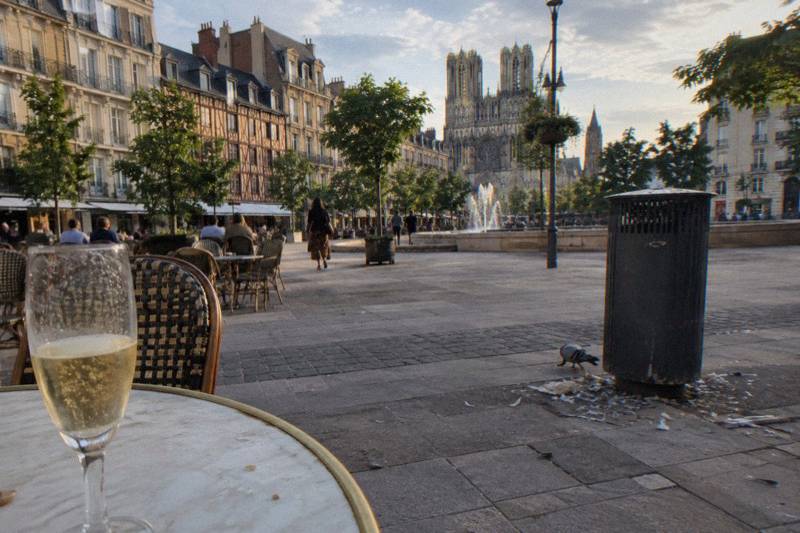
Is Reims Walkable From The Train Station?
Yes, central Reims is walkable from the station: the cathedral, the champagne houses and the tasting rooms all sit in a compact core about 45 minutes from Paris by TGV.
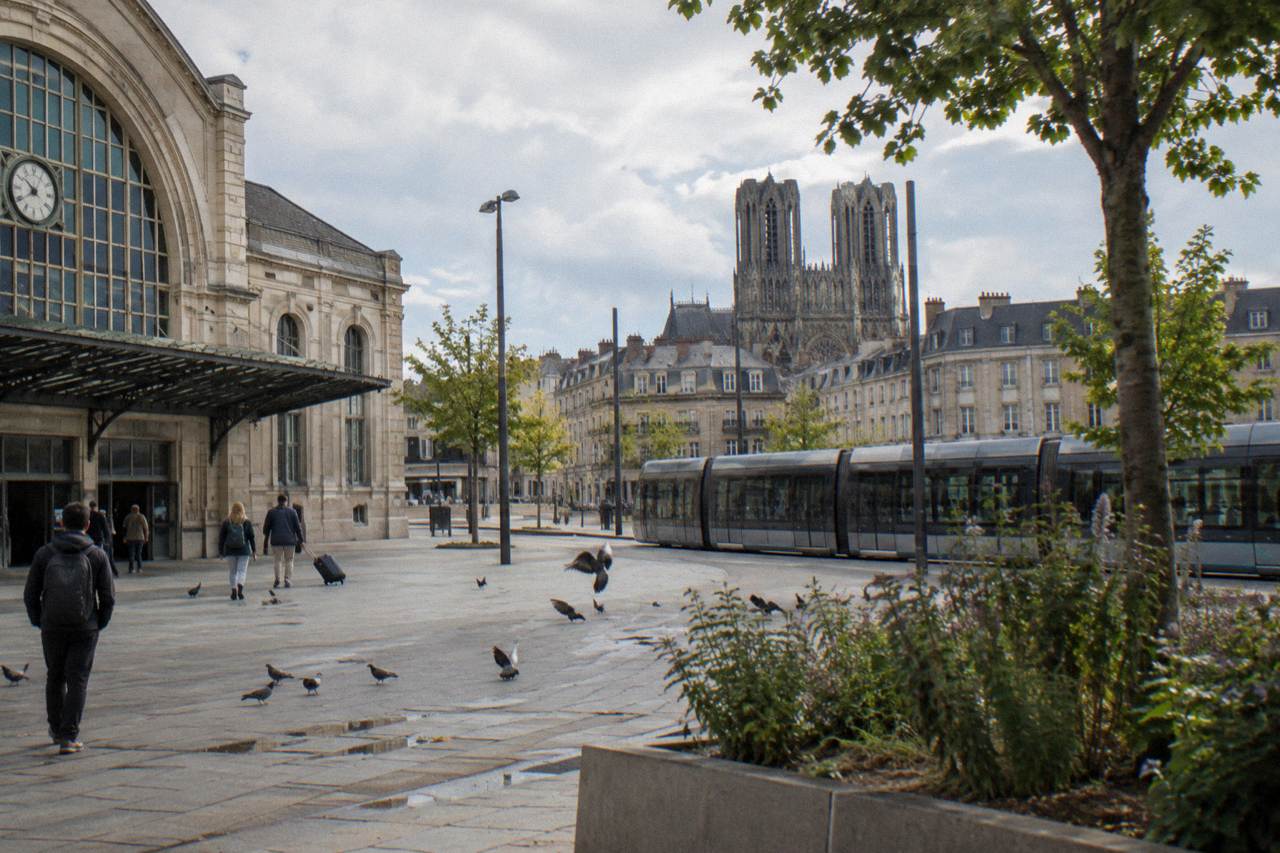
Yes. Reims station sits at the edge of a compact city center, and the main sights a visitor wants, the Cathedral of Notre-Dame, the Place Drouet-d'Erlon restaurant strip, and several major champagne houses with visitor cellars, form a tight cluster that is entirely manageable on foot. No bus, taxi or rental car is needed for a first day of sightseeing and tasting in central Reims.
The station, Reims Centre, opens directly onto the city core. Step out and the boulevards lead toward Place Drouet-d'Erlon, the pedestrianized café and restaurant quarter, from which the cathedral and the champagne avenues radiate. This is not a city where the station sits in a distant suburb requiring a transfer: it is a walkable regional capital whose visitor geography works in your favor. Plenty of visitors complete an entire day here, from morning coffee to a late-afternoon tasting, without once consulting a transit map. Better yet, much of that same circuit costs nothing at all, and our guide to the free side of Reims covers the cathedral square, riverside paths and other sights that will not touch your budget.
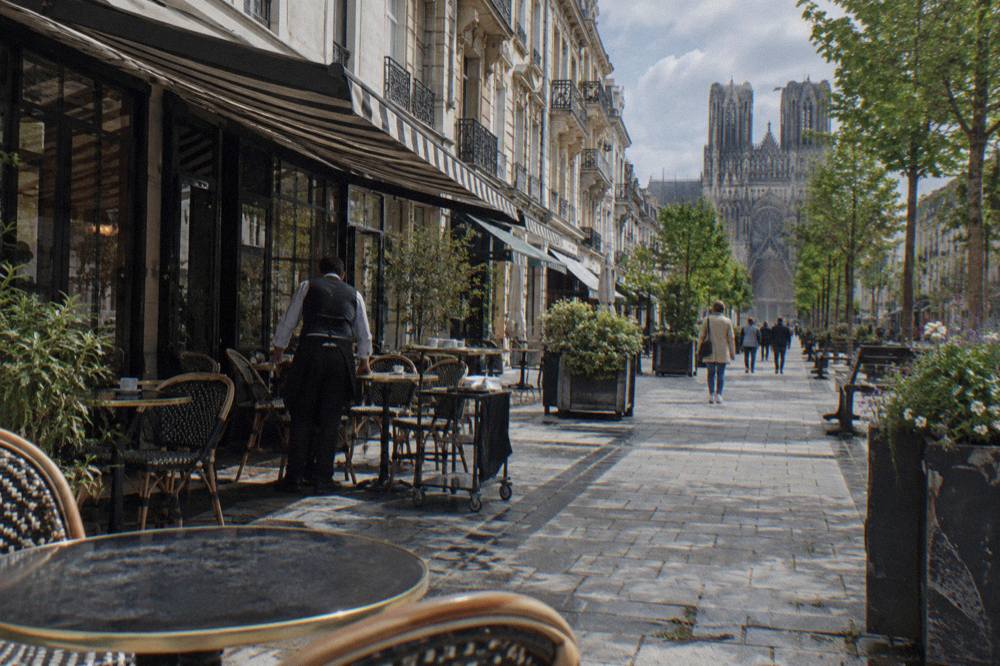
What "walkable" means here is worth being precise about. The cathedral, the carriage houses turned tasting salons of the great brands, the Place Royale and the art-deco storefronts all sit within one another's orbit. The terrain is essentially flat, a point that matters more than it sounds on a day that ends with a cellar staircase or two. Sidewalks are broad, crossings are frequent, and the pedestrian zone removes traffic from the heart of the city entirely. For anyone arriving by TGV from Paris Est, the roughly 45 minutes of rail time between the two cities delivers you into a place built for shoe leather, as the Reims day trip guide lays out in more detail.
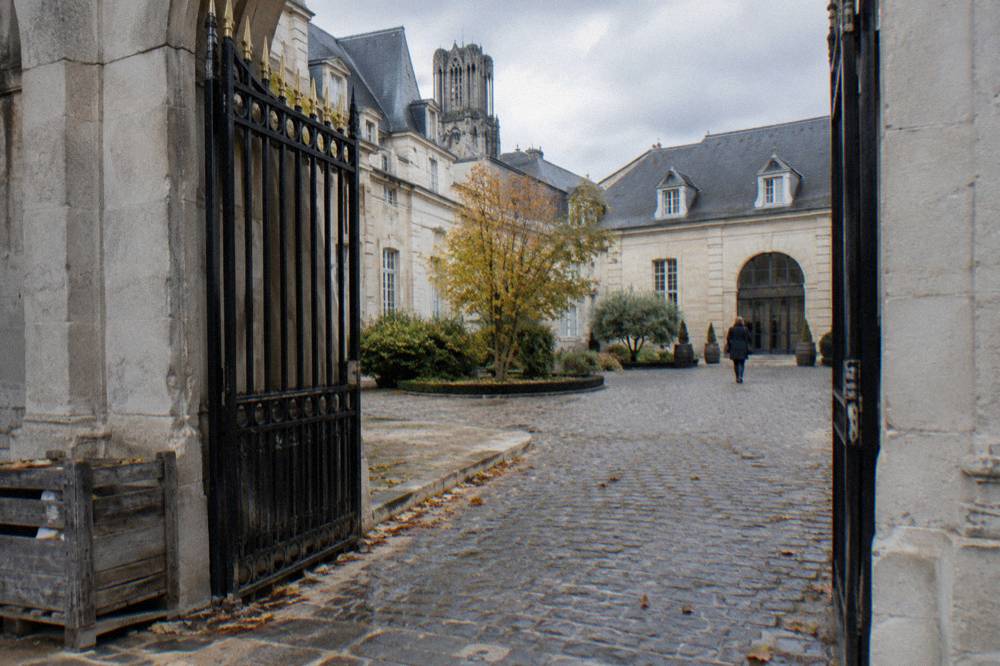
The one qualification is the champagne houses themselves. They are walkable from the station in the sense that no vehicle separates you from them, but a visit inside their cellars requires a booked tour slot, and the cellars go deep, the chalk quarries under Taittinger lie eighteen metres underground in galleries listed as UNESCO World Heritage. Walking gets you to the door; a reservation gets you below it. The house booking pages, not the front desk on arrival, are where that is arranged. Turn up without a slot and the most anyone can offer is the boutique and a bottle to take away.
For visitors who prefer a guided introduction to the city rather than self-direction, a two-hour city-center discovery tour with a champagne tasting at the end covers the walk with commentary, from $19.00 per person, rated 4.33 across 203 reviews, capped at 20 people per group. It is a low-commitment way to orient yourself before striking out on your own, and its free cancellation terms make it easy to add to a plan before the train tickets are even bought.
Which Train Station Is Best For Reims?
Reims Centre is the station to aim for, because it sits beside the city center and makes the entire walkable core available the moment you step off the train. The alternative, Reims Champagne-Ardenne station on the TGV line outside the city, requires a connecting tram or taxi before any walking begins. For a day built on foot, Reims Centre wins outright.
Both stations serve the same rail corridor from Paris Est, but they are not interchangeable for a pedestrian visitor. Reims Centre is the historic terminus at the edge of the center; Champagne-Ardenne is a parkway-style interchange several kilometres out, designed for drivers and connections. Arriving at Champagne-Ardenne and expecting to walk into town would be a serious error of planning: the distance is real, the pavement is intermittent, and the route carries fast traffic with none of the pleasures of the city streets.
The practical habit this imposes is simple. When buying tickets, check which station each departure serves with the same care as the departure time itself, because a faster train to the wrong station produces a slower day. Some services call at both, in which case staying on board to Reims Centre is almost always the right call for anyone on foot. The full range of fares and times is on the SNCF Connect Paris-Reims route page, and the Paris to Reims by train guide covers the practicalities of the journey, including the about 45 minutes of TGV time from Paris Est, the only rail figure worth relying on.
Luggage deserves a thought here too. A walkable arrival only becomes a walkable day if you are not hauling bags, so sort out luggage storage before you go.: hauling a suitcase across the pedestrian quarter, up cathedral steps and down into chalk cellars is nobody's idea of a holiday. A day trip with only a small bag avoids the question entirely, but anyone making a night of it should plan the bag drop before the first sight.
If the goal is a tasting rather than a full exploration, a one-hour champagne tasting in the city center runs from $50.00 per person, rated 4.83 across 111 reviews, which pairs neatly with a train timetable and leaves the rest of the day for walking the cathedral quarter. It lists free cancellation, so it can hold a slot while the rest of the itinerary settles.
For travelers who would rather not manage trains and city navigation at all, an 11-hour Paris day trip with tastings, a cathedral stop and hotel pickup listed runs from $391.00 per person, rated 4.83 across 726 reviews, with lunch included. It removes the station question entirely by collecting you where you sleep, and for many visitors that convenience is worth the difference from the do-it-yourself rail fare.
Is There A Bullet Train From Paris To Reims?
Yes. The TGV high-speed service runs direct from Paris Est to Reims in about 45 minutes, which is what makes a walkable arrival practical in the first place. The speed of the connection, not the size of the city, is why a car-free day in Reims competes with a full driving tour of the region.
That 45-minute figure, published on the Pommery visitor page for guests planning their trip, transforms the arithmetic of a Champagne day. A visitor can leave Paris in the morning, step off the train in the center of Reims before mid-morning, and spend the whole day on foot between the cathedral, the cellars and the cafés without ever thinking about parking, tolls or a designated driver, which on a wine trip is not a small thing. The same journey by car runs about an hour and a half by the road, before a single glass is poured or a single parking space is hunted. Once you know the whole day works without a car, the natural next question is what else the city has going on, and the guide to everything Reims offers beyond the cellars covers the cathedral, the museums and the events calendar.
No fare, timetable frequency or connecting-time figure belongs in a plan made at home: those change constantly and belong to the live SNCF Connect pages. What stays fixed is the geography. Reims is the closest major champagne city to Paris, and its station sits inside the walkable core, a combination none of the other wine towns can match. Epernay, the other main candidate, has its own station but a different relationship between station, avenue and cellars, covered in the Reims or Epernay comparison.
The train-plus-walk pattern also underwrites a small industry of half-day tours that depart from Reims rather than Paris, a distinction that matters for prices. A morning small-group tour of two family producers near Reims runs from $134.00 per person, rated 4.79 across 565 reviews, for four hours with tastings, meeting in Reims. An afternoon equivalent with family growers runs from $148.24 per person, rated 4.8 across 663 reviews, for 4.5 hours with six tastings. Both exclude the cost of reaching Reims from Paris, so they should never be compared like for like with a from-Paris price, and the difference is not pocket change on a family budget.
What Can You Walk To From Reims Station?
The cathedral, the Place Drouet-d'Erlon café quarter, the Place Royale, the great-house cellars open for booked visits, and the boutique and food-shopping streets are all in the walkable cluster around the station. The Palais du Tau beside the cathedral is closed for renovation until 2027, and the abbey of Saint-Remi sits a longer stroll beyond the core.
The Cathedral of Notre-Dame de Reims is the anchor. A Gothic structure where twenty-five royal coronations took place, listed by UNESCO since 1991 alongside Saint-Remi Abbey and the Palace of Tau, it dominates the center and needs no directions: walk toward the towers. UNESCO's listing covers the ensemble, and the cathedral itself is the single most consequential building in the city's visitor geography. Give it a slow hour; the statuary rewards attention, and it costs nothing to stand under the west front.
Around it spread the champagne houses. Veuve Clicquot, Taittinger and Pommery all keep visitor cellars in Reims, reached on foot from the center, though the Pommery estate sits on Saint-Nicaise Hill slightly beyond the tight core, part of the same UNESCO Champagne Hillsides, Houses and Cellars inscription from 2015. Each house runs its own visit tiers: Veuve Clicquot's Brut Yellow Label cellar tour and tasting is 36 EUR, Moët & Chandon's entry visit at its Epernay estate is 48 EUR with the Signature tier at 65 EUR. Check each house's booking page for days and slots, since places are limited and walk-in availability is never a safe assumption. Moët's cellars run 28 km underground, but they lie beneath Epernay, not Reims.
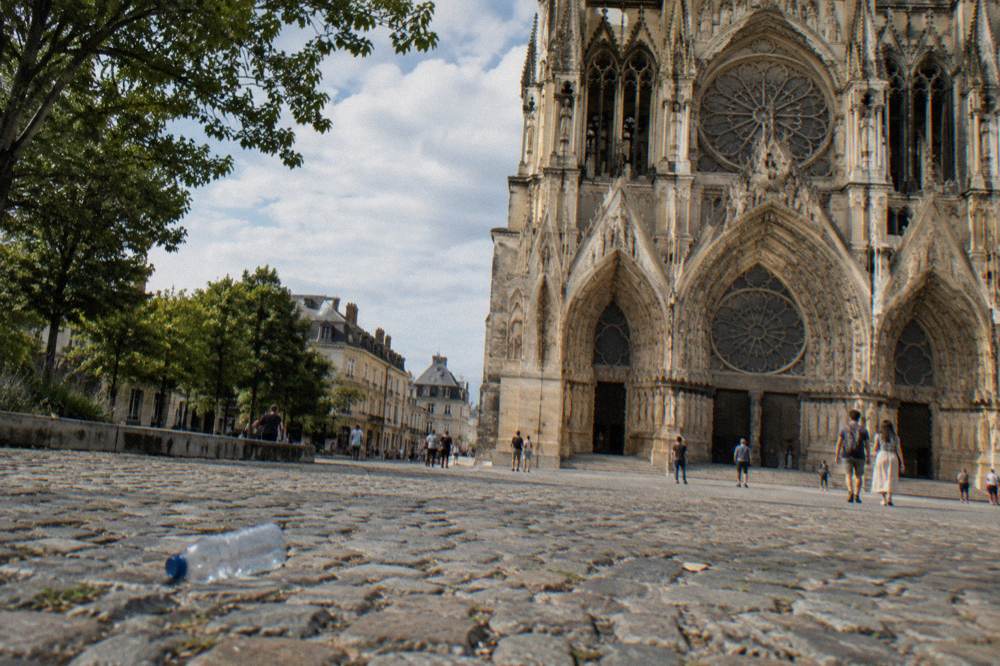
The cathedral towers deserve a specific caution. They are visitable only on booked guided tours, running on a set schedule into mid-November 2026 and then closed until mid-February 2027, with online booking required and no ticket price worth quoting here because the terms keep shifting. Arriving without a reservation means the facade and the nave, not the view. Plan the tower visit first if it matters, then fit everything else around it.
| Sight or stop | Walkable from the station? | What to know before walking there |
|---|---|---|
| Cathedral of Notre-Dame | Yes, central | Open access; towers need a pre-booked guided tour |
| Place Drouet-d'Erlon | Yes, directly beside the center | Pedestrian café and restaurant quarter |
| Veuve Clicquot cellars | Yes, in the core | 36 EUR Brut Yellow Label visit; book on the house page |
| Pommery estate | Yes, but the longest walk of the set | Cellars hold 10 C all year; bring a layer |
| Palais du Tau | Walkable but closed | Renovation until 2027; only a temporary bookshop opens |
| Saint-Remi Abbey | Yes, at the edge of range | Further out than the rest; UNESCO-listed since 1991 |
When Walking Stops Being Enough
Walking covers the city of Reims completely, but it cannot cover the vineyards, the hillside villages like Hautvillers, or the grower estates scattered through the Montagne de Reims. Once the plan extends beyond the city limits, a vehicle enters the picture, either a booked half-day tour from Reims or a full-day tour with pickup from Paris.
This is the honest boundary of walkability. Reims the city is a pedestrian's city; Champagne the region is not. The vineyard belt, the family estates and the viewpoints of the Montagne de Reims stretch across kilometres of hillside with no sensible walking routes between them, and the appellation is vast by any measure, 34,200 hectares across 319 villages worked by 16,460 growers and 410 houses, per Comité Champagne figures. The walkable core of Reims is one small, dense node inside that, and the gap between the two scales is what the tour industry exists to bridge.
The fix is simple and well served. From Reims itself, small-group half days reach the family producers: the two-producer morning tour from $134.00 per person already mentioned, an e-bike vineyard day with lunch from $213.00 per person rated 4.84 across 232 reviews, and a three-grower full day with lunch from $273.68 per person rated 5.0 across 262 reviews. All depart Reims or Epernay, so none is a from-Paris price, and all list free cancellation. The e-bike option deserves a special look for anyone who likes the idea of pedal power between the rows without the uphill sweat.
From Paris, the full days with hotel pickup remove even the train leg: an 8-tasting small-group day with lunch from $364.00 per person, rated 4.81 across 1,780 reviews, the most reviewed day on the books, or the 6-tasting shared day from $262.28 per person rated 4.8 across 1,034 reviews, with no lunch on that one. Small-group and shared days from Paris run from $202.00 to $432.18 per person across the board, a spread wide enough that the inclusions, not the headline number, should drive the choice.
What To Expect From A Day On Foot, By Season
Reims averages between 8 and 11 rainy days a month year round, 114.4 rainy days and 628.2 mm of rain annually at the Reims-Courcy station, so a walking day needs a rain layer in any season. Summer highs average 24.7 C in July and 24.3 C in August; winter means daily maxima near 5.7 C in January, and the cellars sit at 10 C whatever the weather above.
The climate data rewards planning more than luck. The driest stretch on the averages is July through September, at 8.1 to 8.3 rain days a month, which coincides with the harvest window: in 2026 picking began from 6 August, the earliest start ever recorded in Champagne, about 14 days ahead of 2025. May and June are warmer and greener but slightly wetter, at 10.4 and 9.5 rain days. None of this predicts a given day; it just tells you what a jacket is for, and a walking itinerary is the kind of itinerary that meets the weather head on.
| Month | Avg daily high / low (C) | Rain days of 1 mm or more |
|---|---|---|
| January | 5.7 / 0.1 | 10.3 |
| April | 14.7 / 4.2 | 9.6 |
| July | 24.7 / 12.9 | 8.1 |
| October | 15.6 / 7.2 | 8.9 |
| December | 6.3 / 1.1 | 10.7 |
The cellar temperature cuts the other way from the street. Pommery holds its cellars at 10 C all year, and Moët's visitor guidance says plainly to bring warm clothing for its cool cellars, which extend 28 km underground. A summer walking day in Reims still demands a layer for the descent, a point the what to wear for a cellar tour guide treats in full. Comfortable shoes belong on the list too: a full walking day in Reims covers several kilometres, some of it on cobbles.
Planning The Walk: A Practical Order Of Operations
Book the cellar visits before the train tickets, because the house slots are scarcer than the rail seats. Anchor the day on one booked cellar tour, one cathedral hour, and one tasting on the Place Drouet-d'Erlon, in that order of commitment, and let the walking fill the gaps between them. The city rewards aimlessness, but only after the reservations exist.
The sequence matters because failures compound. A train ticket bought for a day with no cellar booking produces a cathedral-and-café day, pleasant but incomplete; a cellar booking made first pins the day and everything else schedules around it. Veuve Clicquot's house page and Moët's visitor page both carry their own calendars, and each says places are limited. The two Reims-based tasting products, the discovery tour at from $19.00 and the one-hour tasting at from $50.00, both list free cancellation, which makes them safe to lock in early and adjust later.
For anyone whose appetite outgrows the walkable core mid-trip, the how much does a champagne tour cost guide breaks down the full price landscape, from the $19.00 tastings up through private days from $555.00 per person. Every guided day trip and tasting option we track is listed on Champagne Tours From Paris.
The walkable day, done well, is the cheapest complete Champagne experience available: about 45 minutes on the train, a city core that asks nothing of you but stamina, one booked cellar below street level, and a glass at the end of it on a pedestrian square. It is also the most flexible, since every element can be moved, swapped or cancelled without a tour bus waiting at a corner.
Common Questions About Walking In Reims
Is Reims Walkable From The Train Station?
Yes. Reims Centre station sits at the edge of the compact city core, and the cathedral, the café quarter and the bookable champagne cellars are all reachable on foot over flat terrain. The outlying TGV station, Reims Champagne-Ardenne, is the one to avoid for a walking day.
Which Train Station Is Best For Reims?
Reims Centre. It opens onto the walkable center. Reims Champagne-Ardenne lies outside the city and requires a tram or taxi connection before you can start walking, so check which station your train serves before booking.
Is There A Bullet Train From Paris To Reims?
Yes, the TGV runs direct from Paris Est to Reims in about 45 minutes. Fares and timetables live on SNCF Connect, and the connection is what makes a car-free, all-walking day in Reims practical from the capital.
Do You Need To Book Champagne Cellars In Advance In Reims?
Yes. The houses say places are limited and advise online booking ahead, and walk-in availability is never something to count on. Veuve Clicquot's Brut Yellow Label visit is 36 EUR; each house manages its own calendar on its booking page.
Can You Visit The Reims Cathedral Towers Without Booking?
No. The towers are open only on booked guided tours on a fixed schedule, and after mid-November 2026 they close until mid-February 2027. The cathedral nave itself remains the freely accessible part of the monument.
Is One Day On Foot In Reims Enough?
For the city, yes: cathedral, one or two cellar visits and a tasting on Place Drouet-d'Erlon fill a day comfortably. For the vineyards and hillside villages, no, that requires a vehicle, either a half-day tour from Reims from $134.00 per person or a full day with pickup from Paris.