What Is The Best Month To Visit Champagne?
A month-by-month guide to timing a Champagne trip: weather averages, the vineyard calendar, harvest dates, house opening patterns and which tours suit each season.
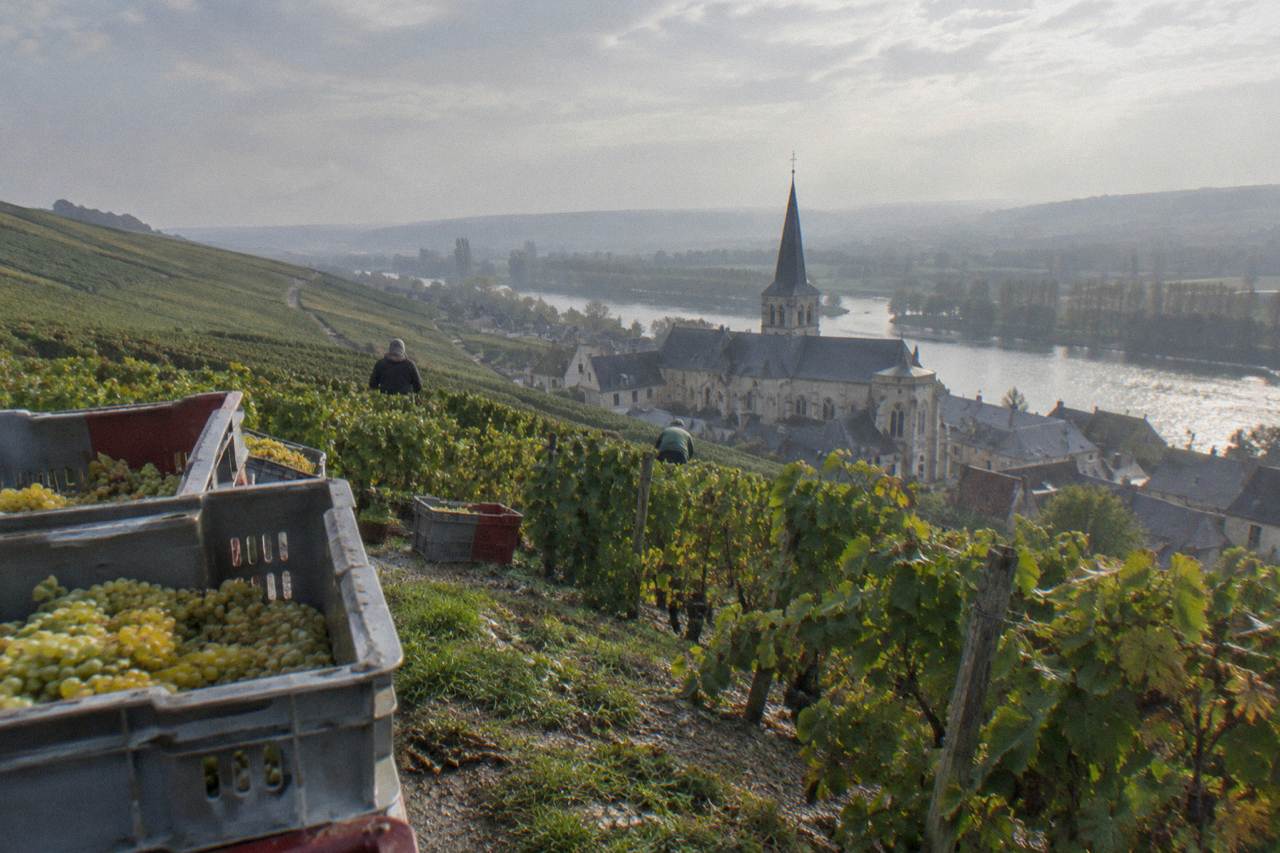
September is the best month for most visitors: harvest activity runs through the region, daytime highs average 20.3 C, and rainfall dips to 8.2 rain days per month, among the driest of the year and close to July's 8.1. Late May and June are the close second choice, with highs of 18.8 to 21.8 C and the vines in full green. Either window pairs well with a well-run small-group day trip out of Paris.
Those two windows exist for different reasons, and picking between them depends on what the trip is for. September is about the region being busy with purpose: grapes come in, tractors fill the small roads between Hautvillers and the Marne, and the whole appellation smells of fermentation. May and June are about landscape and comfort: the vineyards have leafed out, the cathedral city is pleasant to walk, and the days are long enough that a 10 or 12 hour tour from Paris never feels rushed. Both months carry real advantages over July and August, when heat peaks and some cellar visits feel less inviting after a hot drive.
There is a third, quieter argument worth naming early. December has its own constituency, drawn by the Reims Christmas market, which runs 25 November to 27 December, and by the Régalia sound-and-light projections on the cathedral façade from late November into early January. The vines are bare and the days short, but the cellars, the tastings and the festive streets make a cold weekend feel intentional rather than compromised. Anyone whose real constraint is the calendar rather than the climate should not write it off.
One trip that works in either window is the Champagne Day Trip from Paris with 8 Tastings & Lunch, from $364.00 per person, rated 4.81 across 1,780 reviews. It is a small group capped at eight, runs ten hours, includes hotel pickup and lunch, and lists eight tastings, which makes it a strong default whenever the month is chosen. Check availability
The case against the other months is mostly mild, not disqualifying. Winter is quiet, cold and short on daylight, but the cellars are the point then, and they do not change. August is warmest but overlaps with the harvest build-up and French holiday travel. October brings autumn color and thinning crowds. Every month delivers the two things people actually come for, which are the underground cellars and the tastings, and those run year-round, subject to each house's own booking page.
A useful habit when picking the month is to work backwards from what the day will contain. If the plan is one grand house, one grower and a cathedral, comfort outdoors matters less, and any month works. If the plan includes vineyard walks, village wandering or anything on two wheels, the green months earn their reputation fast. Timing, in other words, is really an itinerary question wearing a calendar's clothes.
What The Weather Actually Does Across The Year
Champagne sits at the northern edge of French wine country, so the year swings from January highs of 5.7 C to July highs of 24.7 C, with rain spread fairly evenly at 8 to 11 wet days per month. The driest stretch runs July through September at 8.1 to 8.3 rain days. No month is dry enough to promise weather, so plan around averages, not guarantees.
The figures below come from the Météo-France Reims-Courcy station averages (1981-2010), the standard climate record for the region, published at the station's official climate sheet. They describe Reims; Épernay and the Marne valley a few dozen kilometres south run a shade milder but follow the same shape.
| Month | Average high C | Average low C | Rain days (1 mm+) |
|---|---|---|---|
| January | 5.7 | 0.1 | 10.3 |
| February | 7.1 | 0.1 | 9.6 |
| March | 11.3 | 2.6 | 10.9 |
| April | 14.7 | 4.2 | 9.6 |
| May | 18.8 | 8.1 | 10.4 |
| June | 21.8 | 10.8 | 9.5 |
| July | 24.7 | 12.9 | 8.1 |
| August | 24.3 | 12.6 | 8.3 |
| September | 20.3 | 9.8 | 8.2 |
| October | 15.6 | 7.2 | 8.9 |
| November | 9.7 | 3.4 | 9.7 |
| December | 6.3 | 1.1 | 10.7 |
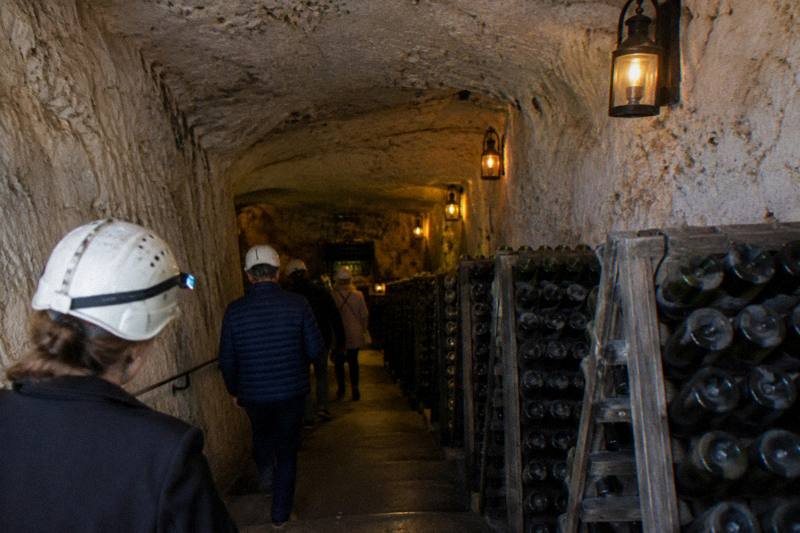
Two practical readings follow from that table. First, the comfortable shoulder months, May, June and September, combine pleasant highs with modest rain-day counts, which matters because half of a Champagne day is spent outdoors walking vineyard paths, village lanes and the Avenue de Champagne. Second, winter cold is real but not punishing, and the cellars hold steady: Pommery, for instance, keeps its cellars at 10 C all year, and Moët & Chandon advises warm clothing for its cool 28 km underground network whatever the season above.
A third reading is less obvious: the overnight lows. In January and February they sit at 0.1 C, which means frost on the roads early and late in the day, and a real argument for tours with hotel pickup in deep winter rather than self-drive itineraries. By June the nights hold above 10 C, so an evening tasting or a late return train feels painless. Anyone packing for a shoulder-season trip should plan layers rather than a single wardrobe strategy, since a September day can swing ten degrees between the morning vineyard stop and the afternoon cellar.
The other timing factor is the train. Paris to Reims takes about 45 minutes by TGV from Paris Est, and travellers checking fares and times should use SNCF Connect, since schedules shift by season. A day that starts with a fast morning train gives even a short winter visit enough hours for a cellar tour and a tasting.
Daylight length deserves a place in the decision too, and not only for photography. A December departure from Paris gets roughly eight hours of usable light, so vineyard photo stops compete with cellar time in a way a June departure, with light past ten in the evening, never experiences. Tours built around scenic overlooks, such as the lighthouse at Verzenay or the viewpoints above the Marne, deliver far more in the long months. That is a quiet reason the May-to-September span dominates most recommendations, including this one.
The Vineyard Calendar, Month By Month
The vine year runs pruning from November to March, bud break late March into April, flowering May to June, veraison in August and harvest from mid-August into September. In 2026 the harvest was the earliest ever recorded in Champagne, with first picking from 6 August and the region in full harvest from 17 August, about 14 days earlier than 2025.
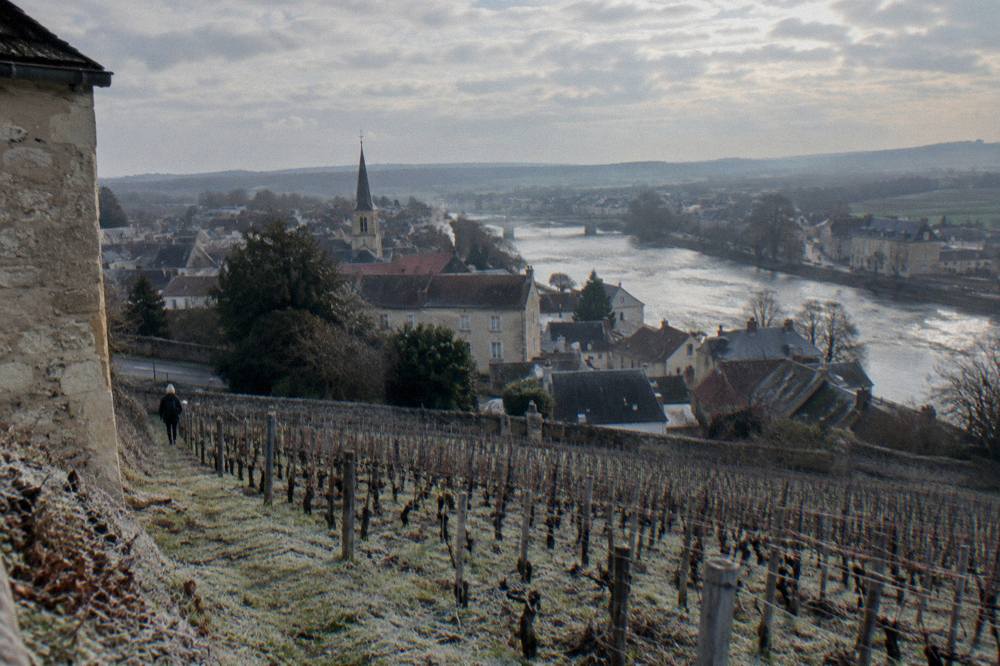
That calendar is the real engine behind "best month" talk, because what a visitor sees in the vines changes more dramatically than the weather does. A trip in March finds bare, chalky slopes under grey skies and growers out with shears. The same slopes in late May are green, ordered and photogenic. By mid-August the grapes have turned, and from late August the villages fill with harvest crews, tractors and the smell of presses working overnight. The Comité Champagne, the appellation's official body, tracks the season publicly and published its 2026 harvest review on 9 September, which reported moderate yields and a harvest about 14 days earlier than 2025, the earliest ever recorded in Champagne.
| Period | What is happening in the vines | What it means for a visit |
|---|---|---|
| November to mid-December | Pruning begins after leaf fall | Quiet cellars, low crowds, short days |
| Mid-December to mid-January | Pruning pause | Village Christmas markets, festive Reims |
| Late January to March | Pruning resumes | Bare slopes, cold walks, cellar-focused days |
| Late March to April | Bud break | First green, changeable weather, mud on paths |
| May to June | Flowering | Green vineyards, the best landscape window |
| July to early August | Berries swell, then veraison | Warmest weather, busiest roads near houses |
| Mid-August to September | Harvest | Activity everywhere, occasional grower closures |
| October | Post-harvest, leaf colour | Amber vines, calm villages, mild days |
The one caution inside the harvest window is availability. Growers and small family houses are working, so a visit booked for late August or early September can find a favourite small producer shut for picking, and houses vary, so check the booking page. The big houses in Reims and Épernay keep their tours running through harvest, which is why September trips built around major cellars, such as a Reims champagne houses itinerary, hold up well even in the busiest weeks.
The 2026 season also showed how much the calendar can move. First picking on 6 August put the whole cycle roughly two weeks ahead of 2025, and the harvest review even compared the fruit's promise to historic years such as 1921, 1947 and 1959. A later ministerial order allowed some 2026-harvest Champagnes to exceed the usual 13 percent alcohol limit, up to 15 percent, after heatwave and drought conditions, which tells the traveller something about the summers the region is now having. Anyone planning around "typical" harvest timing should treat the official start-date announcements each August as the real guide rather than a fixed rule of thumb.
A tour shaped for the warm months is the Champagne: E-Bike Champagne Day Tour with Tastings and Lunch, from $213.00 per person, rated 4.84 across 232 reviews. It departs Reims, runs five to seven hours, includes lunch, and moves between Le Clos Corbier, Aÿ-Champagne and Hautvillers on electric bikes, which only makes sense from spring through early autumn. That seasonality is the clearest example of the month choice changing the trip itself.
Which Champagne House Is The Best To Visit?
Moët & Chandon in Épernay and Veuve Clicquot in Reims are the two headline visits, with entry tours at 48 EUR and 36 EUR respectively, and both can be booked directly on the house's own page. Taittinger offers a different draw: cellars eighteen metres underground in Gallo-Roman chalk quarries listed as UNESCO World Heritage. The best house depends on the town, not the month.
House visits run all year, so the calendar affects them less than it affects the vines. What the month changes is crowds and mood: July and August bring the fullest tour slots, while February weekdays can feel close to private. Moët & Chandon's two entry tiers cost 48 EUR and 65 EUR (Signature), each a cellar tour of about 1 hr 30 min with tastings, and the house recommends advance booking because places are limited. Veuve Clicquot's entry Brut Yellow Label tour costs 36 EUR and passes through the UNESCO-listed crayères. For Mumm, Ruinart, Mercier, Nicolas Feuillatte or Pommery, times and prices are on each house's booking page, and no month is known to close any of them outright.
Seasonal nuance around the houses is mostly about slots, not openings. The official guidance is that no blanket winter or August closure applies across the region, but hours vary house to house and booking is advised in every season. That cuts both ways for timing: a visitor in the quiet months gets shorter waits and longer conversations with guides, while a July visitor gets the fullest schedule of tour departures and tasting formats to choose from. Whichever month wins, the practical move is the same, which is to lock the house visits before the train tickets, since the cellar slots are the scarcer commodity.
Many visitors prefer letting a tour operator handle house bookings entirely. The Full Day All-inclusive Tour in Champagne from Paris in a Minivan, from $267.98 per person, rated 4.9 across 187 reviews, includes a Vranken Pommery stop, lunch, four tastings, hotel pickup and the Reims Cathedral, which removes the booking puzzle for winter and summer alike. The trade-off against visiting independently is flexibility: a book champagne house visits plan allows mixing one grand house with small growers.
Is Champagne Worth Visiting?
Yes, and the official numbers explain why: 34,200 hectares of vineyards across 319 villages, 410 houses and 16,460 growers shipped 266.1 million bottles in 2025, and the region's hillsides, houses and cellars joined the UNESCO World Heritage List in 2015. Reims Cathedral has been inscribed since 1991. Few wine regions pack that much into a 45-minute train ride from Paris.
Worth also depends on season expectations. A visitor chasing postcard vineyards in February will be disappointed by bare chalk; a visitor chasing cellar depth and quiet tasting rooms in the same month gets a bargain experience. The Palais du Tau in Reims is closed for renovation until 2027, and Hautvillers Abbey is private Moët property with no public access, but the adjacent church and village are open, so winter itineraries simply tilt toward cellars, the cathedral and tastings rather than landscapes. The Paris: Champagne Day Trip with Tastings, Cathedral & Pickup, from $391.00 per person, rated 4.83 across 726 reviews, threads exactly that winter-friendly route: Reims Cathedral, Épernay and the Avenue de Champagne with lunch included.
The scale of the place rewards repeat visits at different points in the year, which is a point the one-time visitor often misses. The appellation spans three regions and five departments, yet almost every tour concentrates on the same forty-kilometre band between Reims, Épernay and Hautvillers, because that band holds the cathedrals, the grand houses and the most celebrated slopes. In harvest weeks that band hums; in February it dozes. Both are authentic, and the traveller who goes twice, once green and once bare, tends to come away understanding the wine better than either single trip allows.
For anyone weighing the whole idea, the honest framing is that Champagne rewards a full day rather than a quick stop. The cellars, the cathedral and the Avenue de Champagne are three different kinds of grandeur inside one region, and even the shortest serious itineraries need six hours on the ground. Reims Cathedral alone anchors the reims cathedral story with its coronation past, and its towers run guided visit-by-booking tours from September into November before closing for winter.
What Is The Best Town To Visit In The Champagne Region?
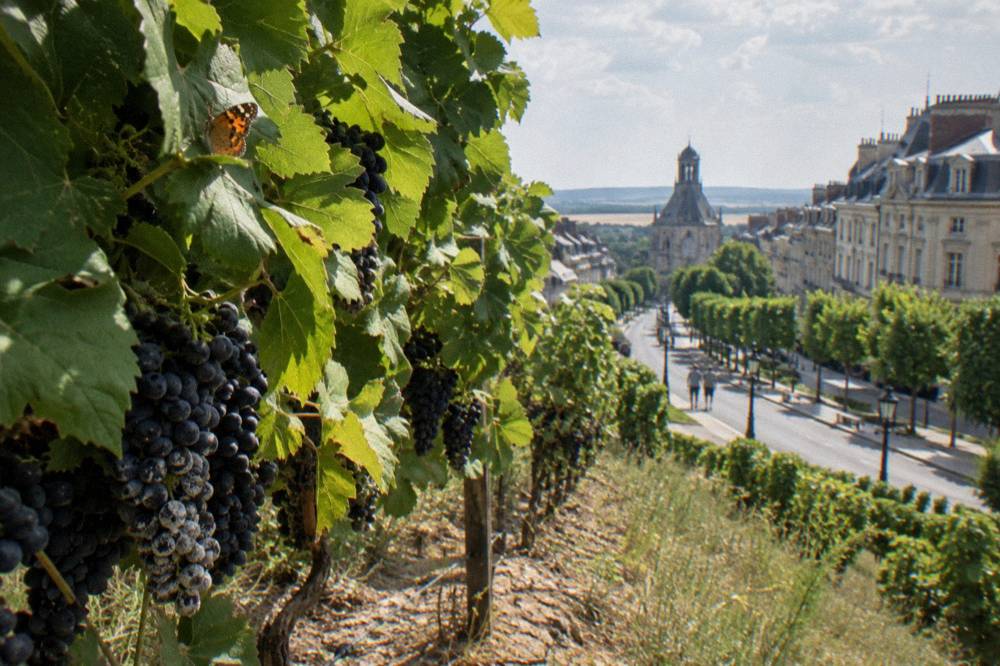
Reims and Épernay split the honours, and the month can decide it. Reims pairs the cathedral with the deepest cellars, Veuve Clicquot, Taittinger and Pommery, and holds more rainy-day options. Épernay counters with the Avenue de Champagne, Moët & Chandon at its head, and easier vineyard access to Hautvillers and Aÿ. Rainy months favour Reims; green months favour Épernay.
Reims is the bigger city and the easier train target, with the TGV arriving about 45 minutes after leaving Paris Est. Its cellars run beneath Saint-Nicaise Hill, part of the UNESCO inscription. Épernay calls itself the champagne capital and backs the claim with house fronts along one avenue. The two towns sit close enough that many tours do both in a day, but a slow traveller with a choice should match town to month: a damp November Saturday is better spent in Reims between the cathedral and a warm cellar, while a bright June one belongs to Épernay's avenue and the hill villages.
There are practical differences beyond mood. Épernay's station forecourt works finished in early September 2026 left rue Pierre-Semard as the only vehicle approach, so anyone driving to a tour departure there should allow a few extra minutes. Reims, meanwhile, layers in the Salon des Vins des Vignerons Indépendants at the Parc des Expositions from 6 to 9 November 2026, an easy add-on for an early-November visit that has nothing to do with the grand houses and everything to do with small producers pouring their own bottles.
| Month window | Better base | Why |
|---|---|---|
| December to February | Reims | Cellars, cathedral, Christmas market, most under cover |
| March to April | Reims | Bare vines and rain favour indoor depth |
| May to June | Épernay | Green vineyards, flowering, long evenings on the avenue |
| July to August | Either | Widest tour schedules, fullest slots, book early |
| September | Épernay | Harvest activity in the hill villages, driest month |
| October to November | Reims | Amber vines en route, indoor anchors on short days |
Half-day options based in Reims keep costs down in any month, provided the train from Paris is budgeted separately. The Reims afternoon tour Champagne and family growers, from $148.24 per person, rated 4.8 across 663 reviews, runs 4.5 hours in a small group capped at eight and visits Hautvillers, which suits a warm afternoon; its prices sit below from-Paris tours because the departure city differs, a distinction worth holding onto when comparing. More on that in how much does a champagne tour cost.
Choosing a date still comes down to three questions: green vines or harvest energy, crowds or quiet, and whether the day is built around cellars or around scenery. Answer those and the month names itself.
House tastings, cellar tours, and vineyard day trips are all collected on Champagne Tours From Paris.
Common Questions About Visiting Champagne
What Is The Best Month To Visit Champagne?
September, for harvest activity, 20.3 C average highs and the year's lowest rain-day count at 8.2. Late May and June are the alternative, with green vineyards and highs of 18.8 to 21.8 C.
What Is The Best Champagne House To Visit In France?
Moët & Chandon in Épernay, with entry tours at 48 EUR and 65 EUR Signature, and Veuve Clicquot in Reims, with a 36 EUR entry tour through UNESCO-listed crayères, are the two headline visits. Taittinger's Gallo-Roman quarry cellars offer the most dramatic underground setting.
What Is The Best Town To Visit In The Champagne Region?
Reims for the cathedral and the deepest cellars, Épernay for the Avenue de Champagne and vineyard access. Rainy months favour Reims; warm green months favour Épernay.
What Is Considered The Best Champagne In France?
Taste decides that, and no official body ranks bottles. The region's scale is official, though: 410 houses and 16,460 growers shipped 266.1 million bottles in 2025, so the range runs far beyond the famous names.
Is Champagne Worth Visiting?
Yes. The region holds a 2015 UNESCO inscription for its hillsides, houses and cellars, a 1991 inscription for Reims Cathedral, and sits about 45 minutes from Paris by TGV.
Which Champagne House Is The Best To Visit?
Veuve Clicquot for value at 36 EUR and historic crayères, Moët & Chandon for scale with a 28 km underground network, Taittinger for UNESCO-listed quarries. Check each house's own booking page for times before choosing a date.