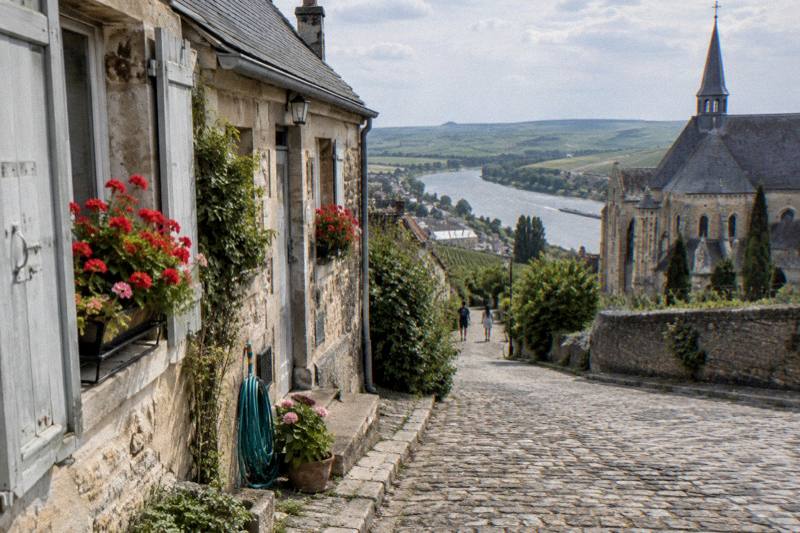
Champagne UNESCO World Heritage Sites: Hillsides, Houses And Cellars
Champagne's hillsides, houses and cellars joined the UNESCO World Heritage List in 2015. Here is exactly what the listing covers, which parts a visitor can walk into, and which tours from Paris reach them.
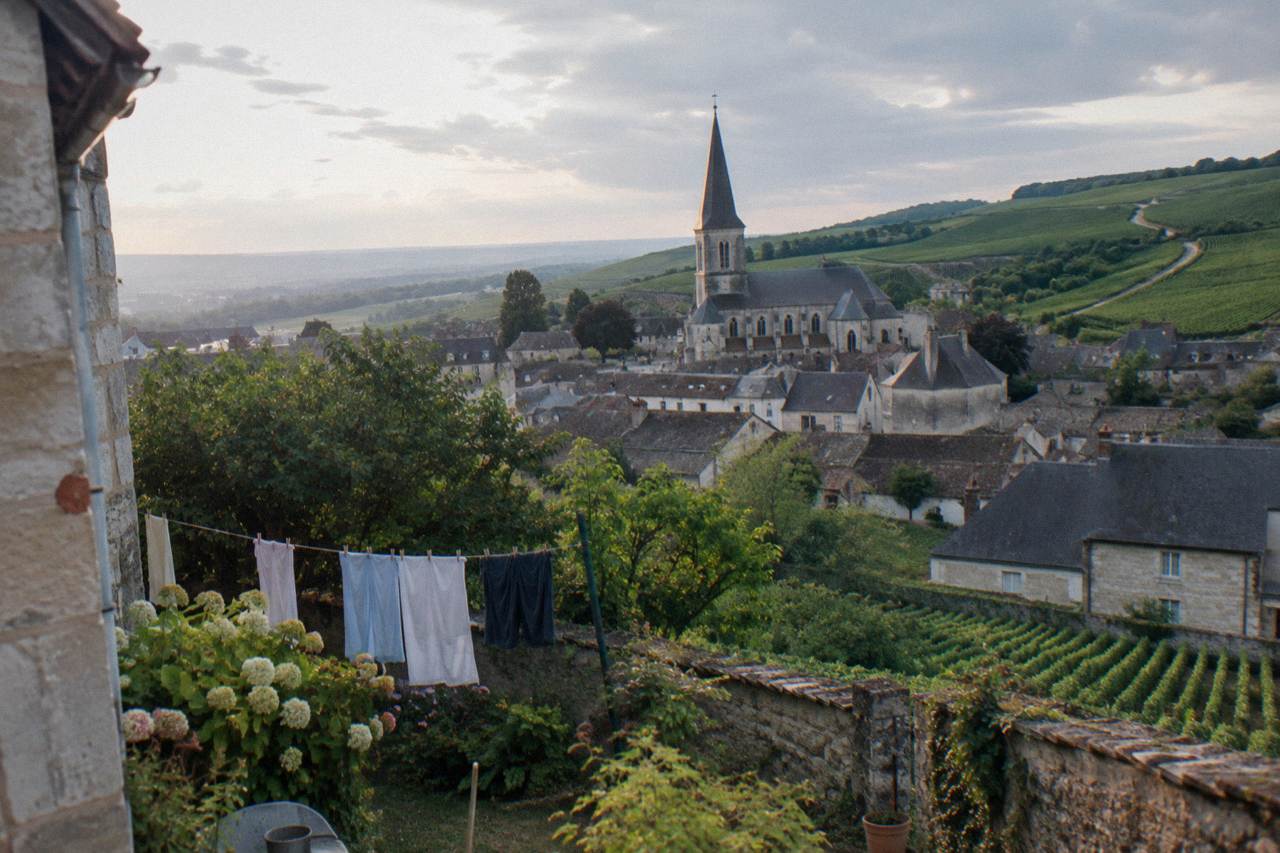
Short answer
The Champagne Hillsides, Houses and Cellars listing was inscribed by UNESCO in 2015 and covers 1,101.72 hectares across three areas: the historic vineyards of Hautvillers, Aÿ and Mareuil-sur-Aÿ; Saint-Nicaise Hill in Reims; and the Avenue de Champagne and Fort Chabrol in Épernay. Many famous cellars, including Moët & Chandon and Veuve Clicquot, sit inside it.
Champagne became a UNESCO World Heritage property in 2015, and the listing is unusually generous to travelers. Unlike a sealed monument, this one counts working vineyards, working cellars and a lived-in avenue among its treasures, so a tasting you pay for with a credit card can happen inside a listed site. The inscribed property covers 1,101.72 hectares with a buffer zone of 4,251.16 hectares, split across three distinct areas. One sits on the hills above the Marne, one under Reims, and one along the most famous champagne address in Épernay. This guide explains what the listing covers, which parts you can actually enter, and how to reach them from Paris.
What Is The Champagne UNESCO World Heritage Listing?
The Champagne Hillsides, Houses and Cellars property joined the UNESCO World Heritage List in 2015 under criteria (iii), (iv) and (vi), recognizing the region as the birthplace of the sparkling wine that took its name. The inscribed property covers 1,101.72 hectares, surrounded by a 4,251.16 hectare buffer zone. It is a cultural landscape rather than a single monument, made of three separate components spread between the Marne Valley, Reims and Épernay.
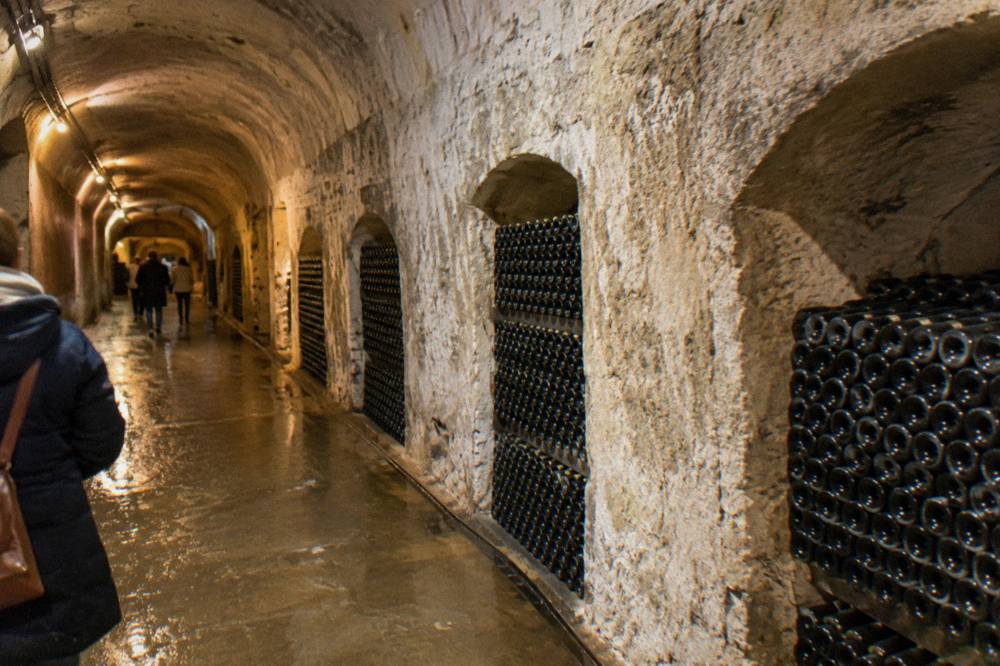
UNESCO inscribed the property because champagne production shaped these places physically over three centuries. Vineyards were replanted on hillsides in ordered rows, villages rebuilt around pressing houses, and cellars dug deep into chalk. The cellars matter as much as the vines. Many are former Gallo-Roman chalk quarries, and some of the longest run for kilometers beneath the towns above them, including a 28 km underground network at Moët & Chandon. Taittinger's cellars sit eighteen metres underground in galleries and Gallo-Roman chalk quarries that are themselves part of the World Heritage inscription.
The listing sits alongside a much older one in Reims. The Cathedral of Notre-Dame, the former Abbey of Saint-Rémi and the Palace of Tau were inscribed separately in 1991 under criteria (i), (ii) and (vi), honored for their architecture and their role in the coronation tradition of French kings. Visitors often see both designations in a single day without noticing the boundary: the cathedral is one property, the cellars under Saint-Nicaise Hill belong to the other. A full background piece on the region's heritage and production methods sits in the guide to how champagne is made.
What Sites Does The UNESCO Listing Actually Cover?
The property has exactly three components: the historic vineyards of Hautvillers, Aÿ and Mareuil-sur-Aÿ on the hillsides above the Marne; Saint-Nicaise Hill in Reims, with its chalk cellars; and the Avenue de Champagne together with Fort Chabrol in Épernay. No other site belongs to the 2015 inscription, though many famous addresses sit inside these areas.
| Component | Location | What It Includes |
|---|---|---|
| Historic vineyards of Hautvillers, Aÿ and Mareuil-sur-Aÿ | Marne Valley hillsides | Slopes, villages and winegrowers' houses above the Marne |
| Saint-Nicaise Hill | Reims | House cellars and crayères cut into chalk, including those used by houses based in Reims |
| Avenue de Champagne and Fort Chabrol | Épernay | The avenue of champagne houses and the Fort Chabrol cellar network |
Each component shows a different chapter of the same story. The hillsides around Hautvillers preserve the village where Dom Pérignon worked at the abbey, and the abbey itself is private Moët property, closed to visitors, though the village church beside it is accessible. Saint-Nicaise Hill in Reims is where the great Reims houses dug their cellars into the face of the chalk, and the Avenue de Champagne in Épernay is the showpiece street where prestige houses lined up their headquarters. Fort Chabrol, less known, is the cellar complex that completes the Épernay component.
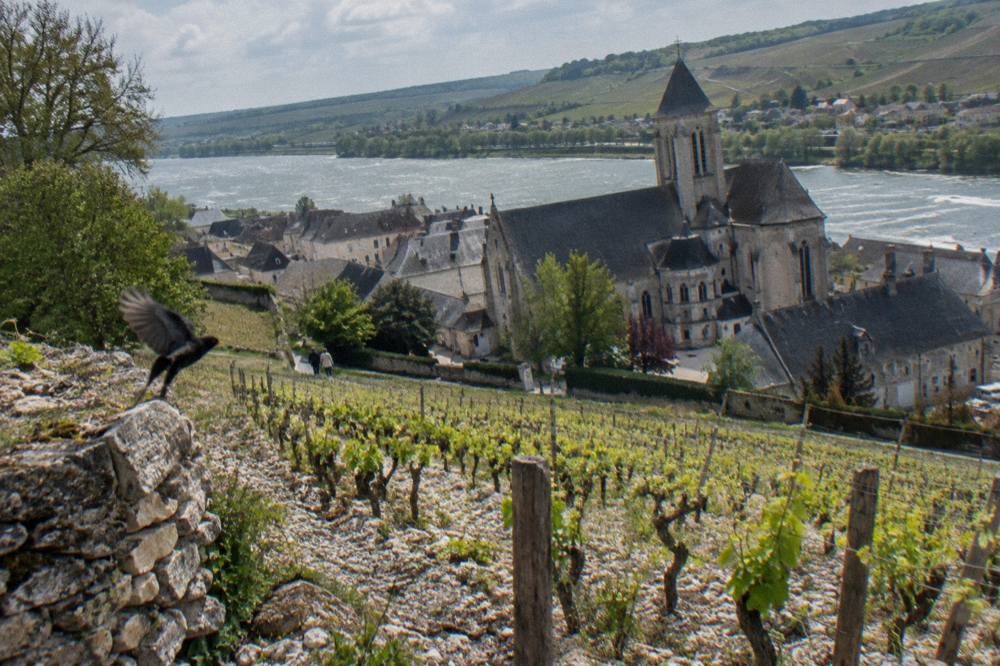
For planning purposes the three components matter because they anchor the two towns most tours visit. A day that reaches Reims and Épernay touches two of the three components, and a route that adds Hautvillers covers the third. That is the shape of the classic day trip, and several operators run exactly that arc. The featured pick on this page, the 6 Tastings Reims and Winery day trip from Paris, lists stops at Nicolas Feuillatte, the Abbaye Saint-Pierre d'Hautvillers, Reims Cathedral and Epernay, from $262.28 per person, rated 4.8 across 1,034 reviews.
One nuance: being inside the World Heritage property does not mean being open to the public. Fort Chabrol, for instance, is not a walk-in attraction. What the visitor can enter are the houses, cellars and museums that sell visits, and those are plentiful across all three components. Book ahead with each house, since cellar tour places are limited, especially during the peak season.
Which Champagne Houses Can You Visit Inside The Listed Cellars?
Several major houses sell visits inside the inscribed areas: Moët & Chandon on the Avenue de Champagne offers entry tiers at 48 EUR and 65 EUR per adult for a 1 hr 30 min tour, and Veuve Clicquot in Reims offers a 36 EUR Brut Yellow Label cellar tour and tasting. Taittinger in Reims also runs guided tours of its UNESCO-listed chalk galleries, bookable through its own site.
The house visit is the most direct way to stand inside the World Heritage property. Moët & Chandon's tours descend into that 28 km network, and the house advises warm clothing because the cellars stay cool. Veuve Clicquot's tours pass through the crayères, the historic chalk quarries on Saint-Nicaise Hill. Pommery, also on Saint-Nicaise Hill, keeps its cellars at 10°C all year, so the same advice applies there. Booking ahead is the norm at every big house, since places on guided tours are limited and walk-in space is never promised.
| House | Location | Listed Site Context | Visit Price On The House's Own Page |
|---|---|---|---|
| Moët & Chandon | Avenue de Champagne, Épernay | Inside the Avenue component | 48 EUR and 65 EUR Signature, each a 1 hr 30 min tour |
| Veuve Clicquot | Reims | Saint-Nicaise Hill crayères | 36 EUR Brut Yellow Label tour |
| Taittinger | Reims | Gallo-Roman chalk quarries, UNESCO-listed | Check the house's booking page |
| Pommery | Reims | Saint-Nicaise Hill cellars | Check the house's booking page |
For Mumm, Ruinart, Mercier and Nicolas Feuillatte, for visit prices and opening hours, check each house's live booking page before you plan a stop. A dedicated breakdown of how to book each house directly is in the guide to booking champagne house visits, and deeper profiles of individual addresses sit in the Moët & Chandon tour guide and the Veuve Clicquot tour guide.
House visits take planning, and a tour bundles that planning for you. The sommelier-led day from Paris, which lists stops at Hautvillers, the Pressoria Champagne Museum, the Avenue de Champagne, Moët et Chandon and Champagne Charles Mignon, costs from $291.00 per person, is capped at seven guests, and carries a 4.94 rating across 143 reviews.
Can You See The UNESCO Sites On A Champagne Day Trip From Paris?
Yes, and a single well-chosen day trip can touch all three components. Shared and small-group day trips from Paris run from $202.00 to $432.18 per person, most lasting 10 to 12 hours, and the itineraries that stop in Reims, Épernay and Hautvillers cover Saint-Nicaise Hill, the Avenue de Champagne and the listed hillsides respectively. Private versions run from $555.00 per person.
The trick is to read each tour's stops rather than its title. A listing that names the Avenue de Champagne puts you on the inscribed avenue in Épernay. One that names Reims Cathedral puts you beside the 1991 property, and if it also names a Reims house cellar you may be under Saint-Nicaise Hill itself. The featured day trip on this page names Nicolas Feuillatte, Hautvillers abbey village, Reims Cathedral, Epernay and the Avenue de Champagne on its route, which is about as complete a heritage sweep as a single day allows. It departs Paris, runs 11 hours, and shows free cancellation on its page.
| Tour | From Price | Duration | UNESCO-Relevant Stops |
|---|---|---|---|
| 6 Tastings, Reims and Winery day trip | from $262.28 per person | 11 hours | Abbaye Saint-Pierre d'Hautvillers, Reims Cathedral, Avenue de Champagne |
| Sommelier cellars day trip | from $291.00 per person | 12 hours | Hautvillers, Avenue de Champagne, Moët et Chandon, Pressoria |
| Cathedral and lunch day trip | from $391.00 per person | 11 hours | Reims Cathedral, Avenue de Champagne |
| Private Epernay and Reims day trip | from $678.50 per person | 8 to 10 hours | Hautvillers, Moët & Chandon, Avenue de Champagne, Reims Cathedral |
Prices here are from-prices per person as shown on each operator's page, and the private figure is the rate for the smallest booking, not a total. Readers weighing the guided route against the railway should also skim the comparison of champagne by tour or train, which works through the trade-offs in detail. For a broader sweep of formats, the small-group champagne tour guide covers the max-eight vans that dominate the category.
Grower-focused options reach the hillsides component in a different spirit. A full-day small-group tour from Reims visiting three small growers lists the Avenue de Champagne and the Abbaye Saint-Pierre d'Hautvillers among its stops, includes lunch, runs 8 hours, and carries a 5.0 rating across 262 reviews, from $273.68 per person. Note that it departs Reims, not Paris, so the train fare is separate.
For the full current selection of day trips and tastings, see Champagne Tours From Paris.
How Do You Reach The Listed Sites Independently From Paris?
The TGV from Paris Est reaches Reims in about 45 minutes, making an independent heritage day entirely practical. From Reims, the cathedral and the Saint-Nicaise Hill cellars are reachable in town, and Épernay's Avenue de Champagne is a short regional hop further south. Fares and timetables sit on SNCF Connect, and the two champagne towns are covered in the site's train guides.
Independent travel rewards travelers who want longer in one place. Reims station connects to the city center easily, and the guide to Paris to Reims by train walks through the arrival and onward options, while the Paris to Épernay train guide does the same for the Avenue component. Once there, a short cellar tasting costs little: a guided cellar visit with tastings in Épernay runs from $19.00 per person for an hour, rated 4.66 across 605 reviews.
| Route | Time | Notes |
|---|---|---|
| Paris Est to Reims by TGV | about 45 minutes | Departure station is Paris Est |
| Reims to Épernay | regional train | Times and fares on SNCF Connect |
| Paris to Épernay | rail via Reims | See the dedicated train guide |
Official SNCF Connect carries the live fares and timetables, since no fixed price belongs on this page. Two cautions for the independent route: Hautvillers abbey itself is closed to visitors as private Moët property, and the Palais du Tau in Reims is shut for renovation until 2027, so neither belongs on a self-guided list. The village church beside the Hautvillers abbey remains accessible, with winter hours from 1 November.
For anyone arriving under their own steam, the Épernay champagne tour guide details what is walkable from the station, and a one-hour cellar visit in town makes an easy anchor booking.
When Is The Best Season To See The Hillsides Component?
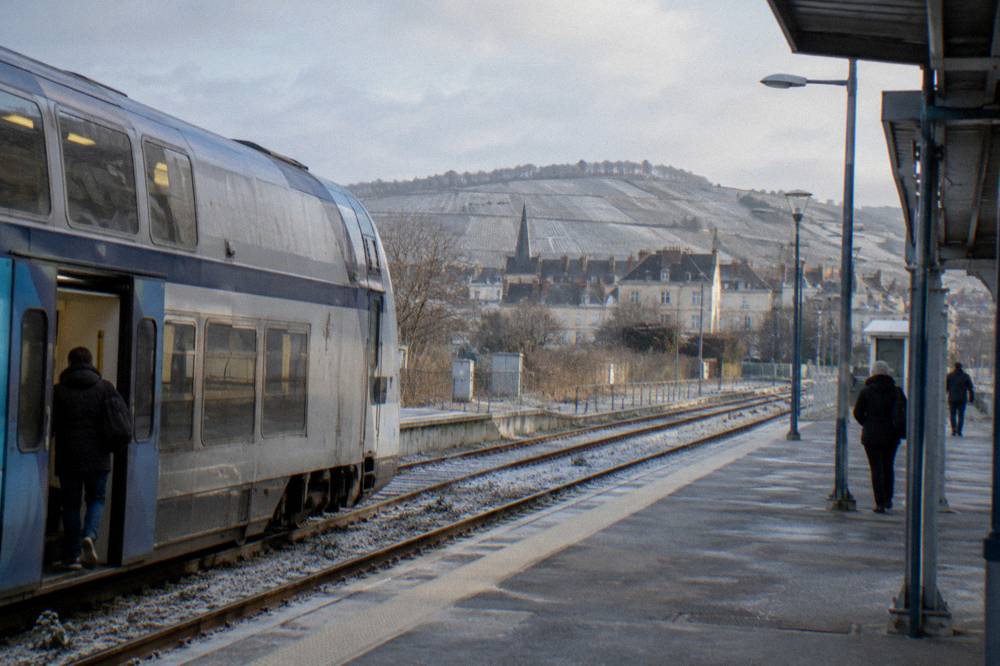
Late August through October shows the vineyards at their most vivid, after the 2026 harvest began with first picking on 6 August, the earliest on record. Météo-France averages for Reims put July and August as the warmest months, near 24°C daily highs, while the region averages 114.4 rainy days a year, so layers and a rain layer belong in the bag whenever you go.
The vineyard calendar drives what the hillsides look like. Pruning runs November to March with a pause mid-December to mid-January, bud break comes late March into April, flowering May into June, and veraison in August turns the fruit. Harvest runs mid-August into September, occasionally to early October in cool years. The 2026 season compressed everything: the harvest ban was announced 12 August, picking became widespread from 17 August, and yields landed moderate because drought shrank bunch size, as the Comité Champagne reported.
| Month | Average High / Low (Reims) | Days With 1 mm Rain Or More |
|---|---|---|
| January | 5.7 / 0.1 C | 10.3 |
| April | 14.7 / 4.2 C | 9.6 |
| July | 24.7 / 12.9 C | 8.1 |
| September | 20.3 / 9.8 C | 8.2 |
| December | 6.3 / 1.1 C | 10.7 |
Winter visits trade green rows for the cellars, and that trade suits the region well. The cellars hold their temperature no matter the weather above, the avenue's houses keep receiving visitors, and the towns carry a Christmas market in late November and December. A fuller seasonal breakdown sits in the best time to visit champagne guide. Whatever the month, the underground stays cool: Pommery's cellars hold 10°C year round, and Moët & Chandon tells visitors to bring warm clothing, advice worth applying to every cellar on the list. The what to wear guide expands on this.

Why Does Champagne Have Two Separate UNESCO Listings?
Champagne carries two listings because the nominations honored different things at different times. Reims Cathedral, Saint-Rémi Abbey and the Palace of Tau were inscribed in 1991 under criteria (i), (ii) and (vi) for their architecture and royal coronation role. The Hillsides, Houses and Cellars property followed in 2015 under criteria (iii), (iv) and (vi), recognizing the cultural landscape that champagne production created.
The distinction shapes a visit more than most travelers expect. The 1991 property is monumental and mostly above ground: a Gothic cathedral where the coronation tradition played out, an abbey, a palace. The 2015 property is industrial and partly below ground: slopes, villages, pressing houses and chalk cellars. A single afternoon in Reims can move from one to the other, from the cathedral towers to a cellar door on Saint-Nicaise Hill, without any sign marking the boundary.
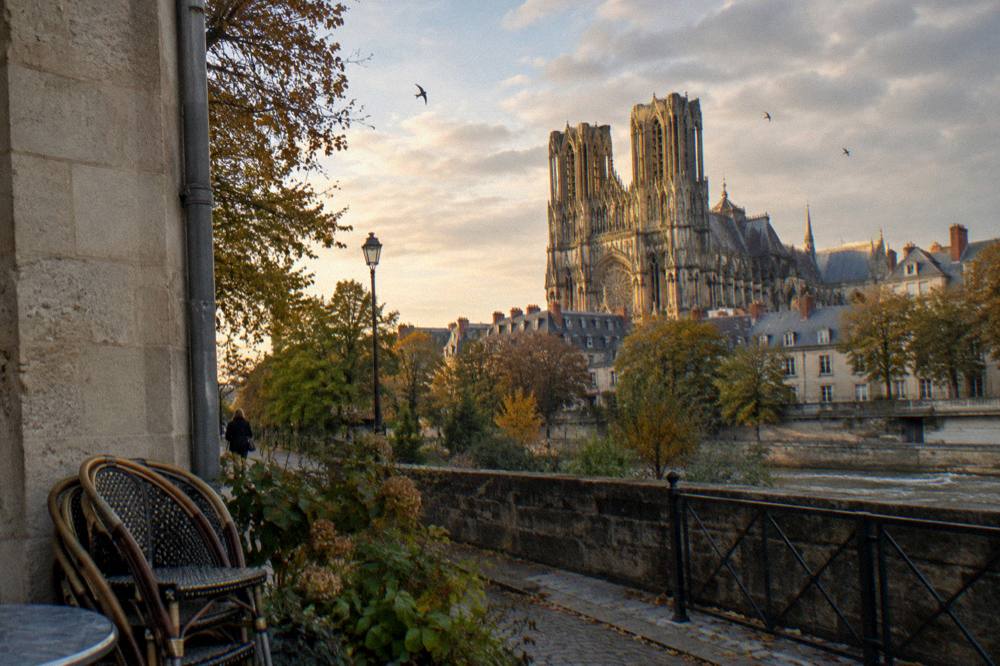
One scheduling note for the cathedral: its towers are visitable only on booked guided tours, with a season running 9 September to 15 November before closing until 15 February, per the official cathedral site. The church itself remains the free, open heart of the visit, and the Reims cathedral guide covers what to look for inside. Readers curious about how the whole region earned its fame can trace the story in the champagne region tour guide.
Whether the heritage angle pulls you toward a booked day trip or a rail-and-cellar plan of your own, the three components give the itinerary its spine. These are the current formats worth comparing side by side.
Common Questions About Champagne UNESCO World Heritage
When Did Champagne Become A UNESCO World Heritage Site?
The Champagne Hillsides, Houses and Cellars property was inscribed in 2015 under criteria (iii), (iv) and (vi), covering 1,101.72 hectares with a 4,251.16 hectare buffer zone. Reims Cathedral, Saint-Rémi Abbey and the Palace of Tau were inscribed separately, in 1991.
What Areas Does The Champagne UNESCO Listing Cover?
Three components: the historic vineyards of Hautvillers, Aÿ and Mareuil-sur-Aÿ; Saint-Nicaise Hill in Reims with its chalk cellars; and the Avenue de Champagne with Fort Chabrol in Épernay.
Which Champagne Houses In France Are Inside The Listed Sites?
Moët & Chandon sits on the Avenue de Champagne in Epernay, inside the inscribed World Heritage site., Veuve Clicquot and Pommery occupy Saint-Nicaise Hill cellars in Reims, and Taittinger's chalk galleries are themselves UNESCO-listed. Visits at Moët & Chandon run 48 EUR and 65 EUR Signature tiers, and Veuve Clicquot's Brut Yellow Label tour is 36 EUR.
Can You Visit The Champagne Houses In Champagne On A Day Trip From Paris?
Yes. Day trips from Paris run 10 to 12 hours and cost from $202.00 to $432.18 per person for shared and small-group formats, with private versions from $555.00 per person. Tours that list stops in Reims, Épernay and Hautvillers cover all three UNESCO components.
Is The Moët & Chandon Cellar Part Of The World Heritage Site?
The Avenue de Champagne component includes the great houses' headquarters and cellars, and Moët & Chandon's 28 km underground network sits beneath it. Visits last 1 hr 30 min, and the house advises bringing warm clothing because the cellars stay cool.
Can You See The UNESCO Vineyard Hillsides Without A Tour?
Partly. Hautvillers, Aÿ and Mareuil-sur-Aÿ are ordinary villages with public streets and views over the listed slopes, and the TGV reaches Reims from Paris Est in about 45 minutes, with Épernay a regional hop further. The abbey at Hautvillers itself is closed to visitors as private property.