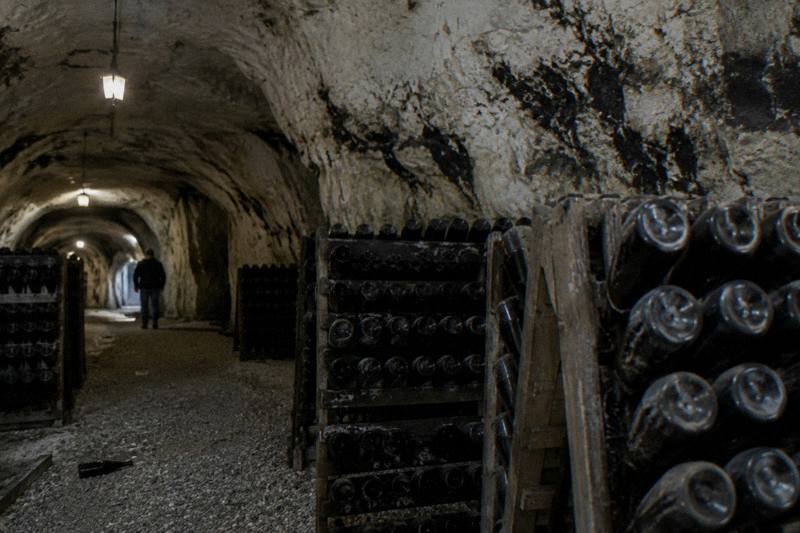
Is It Cheaper To Buy Champagne In Epernay?
A clear-eyed answer to whether champagne is cheaper in Epernay, with house visit prices, cellar-door buying on grower tours, and what a day trip actually costs.
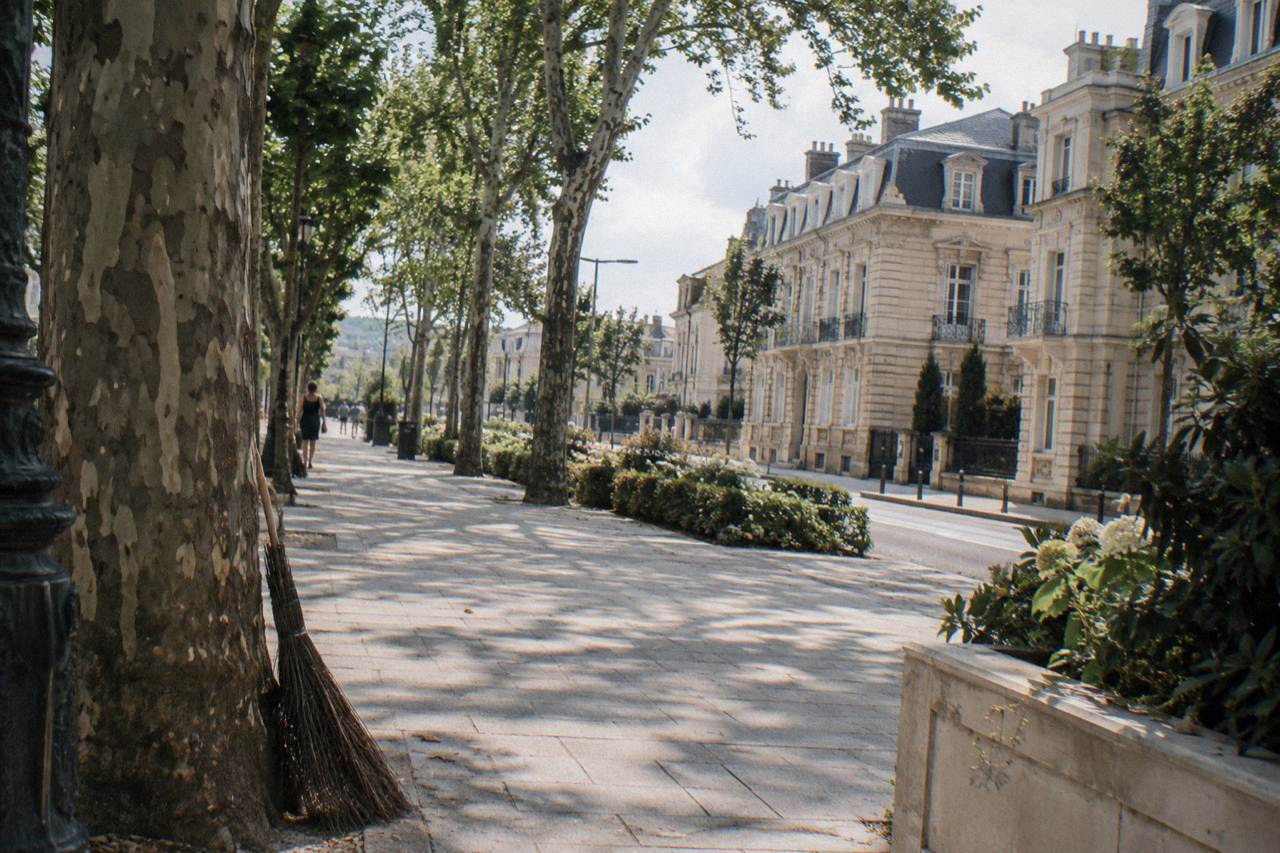
Sometimes, but not in the way most visitors expect. No official bottle price from any major house supports a specific saving, so any exact discount figure would be invented. What is real: grower estates on tour itineraries sell at the cellar door, house visits in Epernay start at 48 EUR, and an hour of guided tasting in a cellar runs from $19.00 per person.
The question usually arrives in two forms. A shopper standing on Avenue de Champagne wonders whether the bottle in front of them costs less than the same bottle at home. A planner booking a tour day wonders whether the trip pays for itself in savings on what goes in the suitcase. These are different questions, and they have different answers.
For the first: the large houses on the avenue, Moët & Chandon chief among them, sell at prices set with a global market in mind. Houses tend to price a flagship cuvée much the same at the cellar door in Epernay and in a Paris shop, since they guard their pricing closely. Nobody outside the houses publishes an official cellar-door bottle price, and a number quoted from memory would be fiction. What the cellar door does give you is access, the chance to buy cuvées that never reach export shelves. That access only pays off if you pick the right producer, so our guide to the best champagne house to visit in Epernay weighs the grand cellars against the smaller growers on and off the avenue.
For the second: the arithmetic works differently. A day built around grower estates, where the producer pours and sells in the same room, delivers tasting, story, and purchase in one stop. That is the version of "cheaper in Epernay" that holds up. Tours that list family estates and cooperative visits put you in rooms where buying direct is the normal way of doing things, not a special arrangement for tourists.
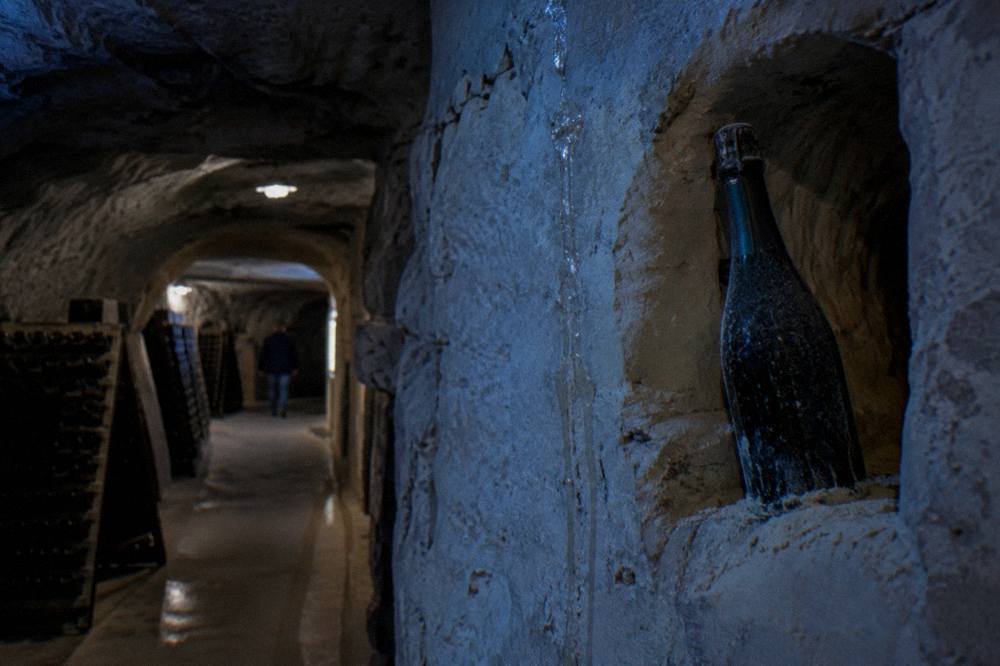
The cheapest structured tasting is the guided cellar visit at Champagne Vollereaux in Pierry, near Epernay, from $19.00 per person for one hour, rated 4.66 across 605 reviews. It answers the taste question before you spend anything on the take-home question. Looking for a tasting with lunch included or a straightforward bus day trip? Both are on Champagne Tours From Paris.
There is also the question of what the appellation itself is worth, which is really the question of why champagne costs what it costs anywhere. The Comité Champagne counts 34,200 hectares across 319 villages, 16,460 growers and 410 houses, shipping 266.1 million bottles in 2025. Scale like that, with a protected name and strict rules, sets a floor under every bottle sold in Epernay. Cheap champagne does not exist; cheaper access to good champagne sometimes does.
Can You Buy Champagne At The Cellar Door In Epernay?
Yes, on itineraries built around growers and family estates, which is exactly where cellar-door buying is routine. The big houses sell after visits too, but their shop prices track global pricing rather than local bargains. Tours from Reims such as the Family-Run Wineries trip and the Full Day 3 Small Champagne Growers tour stop at family estates and small producers.
The distinction that matters is between a house and a grower. A house buys most of its grapes from hundreds of growers, blends at enormous scale, and sells through distributors on every continent. A grower, a récoltant-manipulant in the local vocabulary, works a small holding, makes the wine, and often sells most of it from the room next to the press. That producer has no export margin to protect and every reason to pour for you personally.
Tours that stop at family estates make that economy reachable without a rental car. The full-day small-group tour visiting three small champagne growers, from $273.68 per person with lunch included and rated 5.0 across 262 reviews, runs from Reims through the Avenue de Champagne and Hautvillers. The From Reims day trip to three family domains, from $286.00 per person, also includes lunch and nine tastings, rated 4.8 across 251 reviews. Both put you in rooms where the person selling the bottle had a hand in making it.
Is that cheaper? Per bottle, grower prices at the cellar door often sit below the flagship cuvées of the global houses, though no official bottle price from either side is published to prove a percentage. Per experience, a tasting poured by the producer at a family estate comes included in small-grower tours from $134, before you have paid separately for any big-house cellar visit on the avenue. The saving is structural, not a sticker discount.
One practical note for the suitcase: quantities matter. Growers may cap how many bottles a visitor buys of rare cuvées, and shipping home is a separate service each estate handles its own way. Ask at the cellar door rather than assuming, and check the tour's page for what it says about purchases along the route. A second note: what you taste is what the estate makes, so a grower who specializes in pinot meunier will not pour a chardonnay-led cuvée. Taste across several producers before deciding what deserves the luggage space.
What Do House Visits Cost In Epernay?
Moët & Chandon in Epernay prices its entry visit at 48 EUR and its Signature visit at 65 EUR, each a 1 hr 30 min cellar tour with tasting. Veuve Clicquot in Reims lists a Brut Yellow Label visit at 36 EUR. No other house on the avenue publishes a visit price on an official page.
Those three numbers are the only official visit tiers that can be stated with confidence, and they set the mental budget for a day. The Moët figures come from the house's own visitor page, which also notes the 28 km underground network and advises warm clothing for the cool cellars, sensible for anyone pairing the visit with a walk down the avenue. Veuve Clicquot's 36 EUR visit runs through the UNESCO-listed crayères in Reims.
| House | City | Official visit tier | Price | Notes |
|---|---|---|---|---|
| Moët & Chandon | Epernay | Entry cellar tour and tasting | 48 EUR | 1 hr 30 min |
| Moët & Chandon | Epernay | Signature cellar tour and tasting | 65 EUR | 1 hr 30 min |
| Veuve Clicquot | Reims | Brut Yellow Label tour and tasting | 36 EUR | Crayères cellars |
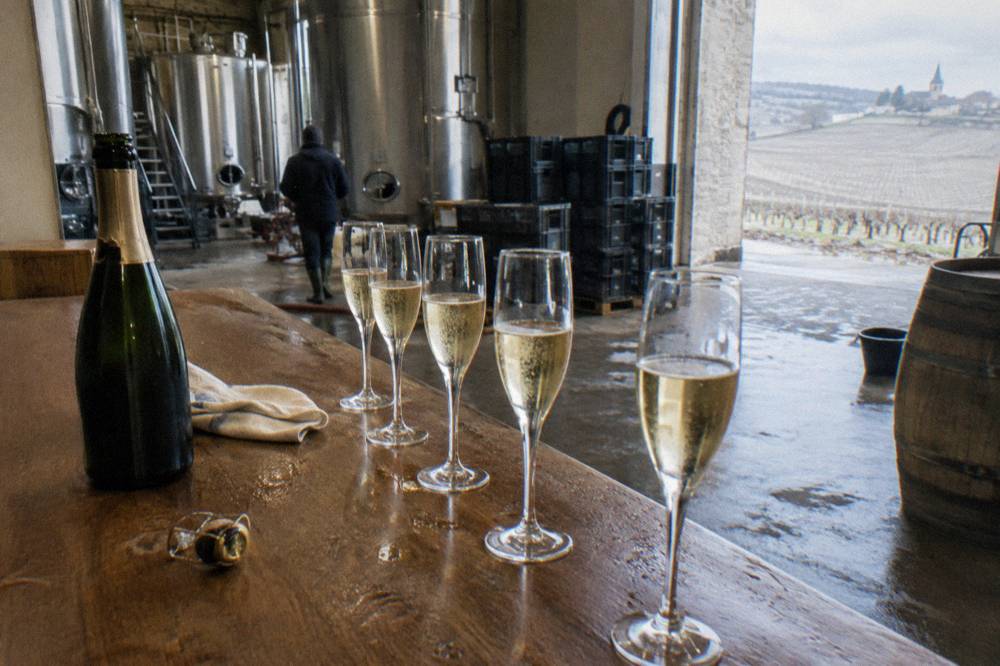
Against those tiers, a guided tasting in an Epernay cellar at from $19.00 per person looks like the cheapest structured pour in town, and it takes an hour, which leaves the rest of the day for the avenue itself. For prices and tour options at other houses, the answer is always the house's own booking page: hours and availability shift with the season, and Moët's own visitor page advises booking ahead rather than relying on walk-ins.
The visit-versus-bottle framing matters here. Paying 48 EUR to walk Moët's cellars does not discount the bottle you buy afterwards; it adds an experience to it. If the goal is champagne for less, spend the visit budget on a grower day instead, where several tastings and lunch arrive inside one tour price, and buy what you liked at the door.
How Do Grower Tours Compare To House Visits On Price?
A grower day tour from Reims with lunch runs from $273.68 to $286.00 per person and includes six to nine tastings plus a meal, while a single house visit costs 36 to 65 EUR before any purchase. Half-day grower options from Reims start at $134.00 per person. These tours depart Reims, not Paris, and exclude the train.
That departure detail is the fine print most comparisons skip. Reims is about 45 minutes from Paris Est by TGV, per the Pommery visitor page, and SNCF Connect shows fares and times for the route. A Reims-based tour plus a train ticket is a different purchase from a Paris-departure day trip, which handles travel for you: those run from $202.00 to $432.18 per person depending on group size, tastings and lunch.
| Tour | Departs | Duration | From price | Includes |
|---|---|---|---|---|
| Three Small Champagne Growers full day | Reims | 8 hours | $273.68 per person | Lunch, small group max 8 |
| Three Family Domains day trip | Reims | 8 hours | $286.00 per person | Lunch, 9 tastings |
| Morning Tour, Two Producers | Reims | 4 hours | $134.00 per person | 6 tastings, small group max 8 |
| Epernay cellar visit with tastings | Epernay | 1 hour | $19.00 per person | Guided tasting, max 12 |
The full-day grower tour earns its place in this comparison for one reason: 262 reviews at 5.0, on an itinerary that includes the Avenue de Champagne and the Abbaye Saint-Pierre d'Hautvillers. The abbey itself stays closed to visitors as private Moët property, but the village around it is where the grower story begins, and the tour's page describes what you see in its place.
The three family domains tour tells the same story with more pours: nine tastings and lunch from $286.00 per person, rated 4.8 across 251 reviews, with stops in Reims, Hautvillers and on the avenue. For a shopper, either day answers the buy-here question better than any single house visit, because you taste across producers before committing to a case.
Half-day options trim the budget without losing the cellar door. The morning tour from Reims visits two small family producers near the city from $134.00 per person, six tastings included, rated 4.79 across 565 reviews. Pair it with a morning TGV and you have a Paris-to-growers day that undercuts most Paris-departure tours on paper, at the cost of arranging your own train.
Can You Walk Between Champagne Houses In Epernay?
Yes, the Avenue de Champagne concentrates houses within a short walk of each other, which is why it anchors the UNESCO inscription alongside the historic vineyards of Hautvillers, Aÿ and Mareuil-sur-Aÿ and Saint-Nicaise Hill in Reims. Walking the avenue is free; entering cellars is not, and each house books its own visits.
The avenue's layout explains its shopping reputation better than any price does. Producers sit shoulder to shoulder, so a visitor can compare experiences in a single afternoon in a way that is impossible in the scattered hillside villages. The fuller walking picture, including distances and which houses sit where, is covered in the companion guide to walking between Epernay's champagne houses.
What the walk will not do is produce discounts. Each house on the avenue manages its own visits, and several, including names as big as Mercier and Moët & Chandon, appear on tour itineraries without publishing an official visit price of their own. When a day trip from Paris lists a major house among its stops, the house varies by date: one departure may visit Moët & Chandon, another Pommery or Lanson, and the tour's page names which.
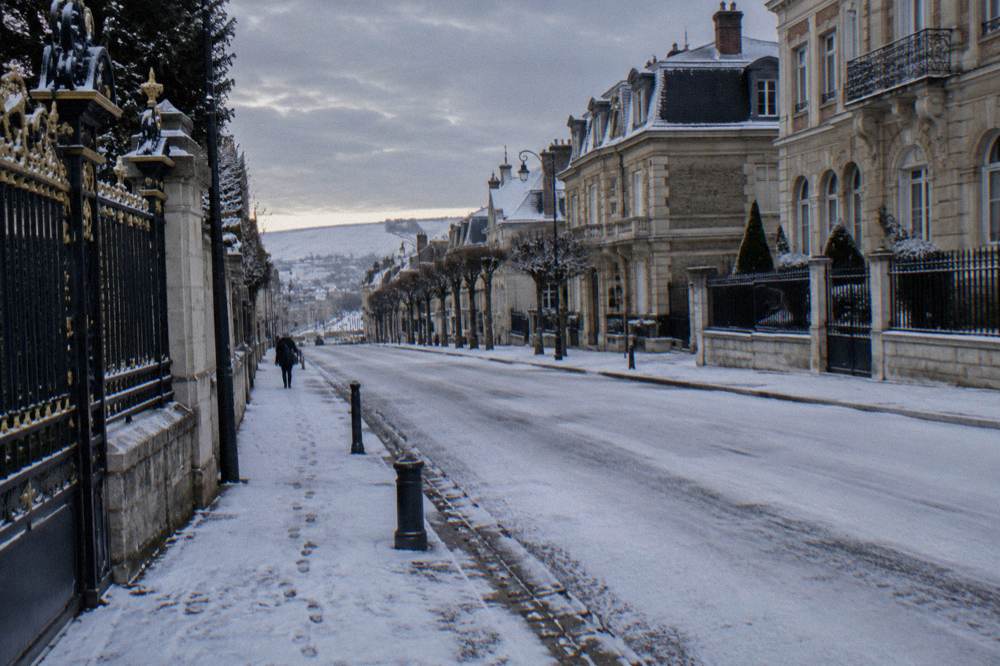
For the broader question of which houses reward a visit most, the guide to Epernay's champagne houses compares them side by side. The short version for a shopper: walk the avenue for the architecture and the concentration of choice, drive or ride into the hills for the buying.
Why Is Cava So Much Cheaper Than Champagne?
Because champagne is a regulated appellation with 34,200 hectares, 319 villages, hand harvesting under the rules, and 266.1 million bottles shipped in 2025, while cava comes from a much larger growing area with mechanized picking and lower land costs. The name Champagne is legally reserved, and scarcity plus labor set the price floor.
This question belongs in a buying guide because it explains what you are paying for in Epernay. The appellation figures come from the Comité Champagne: 16,460 growers and 410 houses operate inside a delimited zone that climate limits to the north-eastern edge of viable still-wine ripening. Yields, pressing ratios, minimum aging on lees, all are rule-bound in a way few other sparkling regions replicate. The method of making sparkling wine in bottle can be, and was, taken abroad; the delimited zone and the restrictions that come with the name were not.
Cava's production zone sprawls across Catalonia and beyond, machine harvesting is permitted, and land costs a fraction of Grand Cru chalk. None of that makes cava lesser; it makes it a different economic object. The visitor standing in an Epernay cellar is paying for the name, the chalk, the climate risk and the hand work, and the UNESCO inscription of the Champagne Hillsides, Houses and Cellars in 2015 formalized what that landscape means culturally.
The practical takeaway for a shopper: do not expect Epernay to close the gap with a supermarket cava price. The honest comparison inside Epernay is between the big houses and the growers of the same appellation, and that is where cellar-door buying lives. The deeper background on the region's production rules is in the guide to how champagne is made.
Should You Buy On A Tour Day Or On Your Own?
On a tour day, if buying is the goal, because tours that list family estates put the producer in the room and the tasting inside the price. On your own works for the big houses on the avenue, where visits book directly and shopping follows. The cheapest structured pour, the $19.00 cellar tasting in Epernay, fits either plan.
The buyer who rides a grower tour tastes before spending, which is the whole discipline of shopping for wine. Six to nine tastings across a day, lunch included on the full-day options from $273.68 to $286.00 per person, and purchases made in the same room where the pour happened: that is a defensible way to fill a case. The independent plan, a TGV to Reims at about 45 minutes from Paris Est, then the avenue on foot, gives more control and more logistics.
Booking behavior matters on both plans. Moët's own visitor page recommends advance online booking because places are limited, and walk-ins are possible but not promised. The same logic applies to tour seats: small groups cap at eight, and dates near the holiday season fill first. Free cancellation appears on the grower tours in this comparison, so a change of plan does not strand the budget.
One closing frame for the number-minded reader. Paris-departure day trips run from $202.00 to $432.18 per person; Reims and Epernay-based days from $134.00 to $286.00 before the train; a structured tasting from $19.00. Against that ladder, the buying question stops being "is it cheaper here" and becomes "what do I want the day to do". If the answer is taste widely and buy at the source, the grower tours win. If it is one legendary cellar and a bottle with a story, book the house, pay the visit tier, and enjoy the walk.
Common Questions About Buying Champagne In Epernay
Is It Cheaper To Buy Champagne In Epernay?
Not reliably at the big houses, whose prices track global markets, and no official bottle price backs a specific saving. The real value is at grower estates on tour itineraries, where cellar-door buying is routine and tastings arrive inside the tour price.
Can You Buy Mini Bottles Of Champagne?
Some houses and grower estates sell small formats at their cellar shops, but availability varies by producer and no official page lists prices for them. Ask at the cellar door on the day; tours that stop at family estates pass through working sales rooms where small formats are most likely to appear.
What Is The Best Champagne House To Visit In Epernay?
Moët & Chandon is the anchor visit on the avenue, with official tiers at 48 EUR and 65 EUR for a 1 hr 30 min cellar tour and tasting, and a 28 km underground network. What counts as best depends on whether you want global heritage or a grower's personal pour, and the grower side is easiest to reach on a small-group day tour.
Why Is Cava So Much Cheaper Than Champagne?
Champagne is restricted to 34,200 hectares across 319 villages with hand harvesting and long mandatory aging, while cava draws on a far larger zone with mechanized picking and lower land costs. The regulated scarcity of the Champagne name sets a price floor that Epernay cannot and does not undercut.
Can You Walk Between Champagne Houses In Epernay?
Yes, the Avenue de Champagne lines up the houses within a short walk, which is why it anchors the UNESCO inscription. Walking is free, but each house runs and prices its own cellar visits, so book ahead for the ones you most want to enter.
Which Is The Best Champagne House To Visit In Epernay?
For a first visit, Moët & Chandon offers a 28 km underground cellar network and the official 48 EUR entry tier; for intimacy, a grower estate on a tour such as the full-day three-growers itinerary from Reims puts the winemaker in the room. Many visitors do one of each in a single day.